November 2019. Atlantic City. A woman played blackjack for six hours straight at the Borgata, betting two hundred dollars a hand. By midnight, she had lost forty-seven thousand dollars. She did not understand what had happened. She felt like she was playing well, making good decisions. She was not. The math was against her the entire time. That gap between her perception and the arithmetic is called the house edge.
The house edge is the casino's average profit per bet, expressed as a percentage of the original wager. On a blackjack hand, the house edge (if you play perfect basic strategy) is roughly 0.5%. On every dollar wagered, the casino expects to earn half a cent in the long run. Roulette? The house edge on an American wheel is 5.26%, because of the green double-zero. Slot machines? The house edge varies by state law, but typically runs between 2% and 15%, sometimes higher in rural casinos.
How the House Edge Works
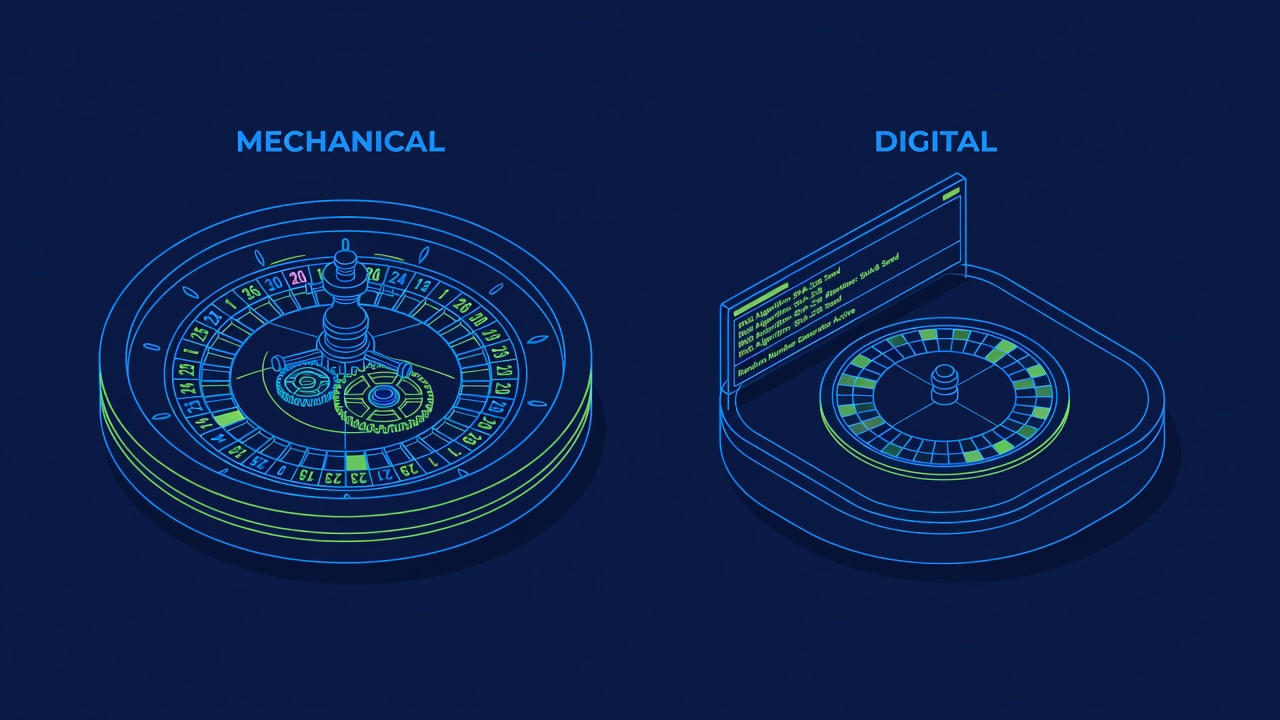
Consider roulette. An American wheel has 38 numbers: 1 through 36, plus 0 and 00. If you bet one dollar on red, and red comes up, you win one dollar. If you bet one dollar on red, and black comes up, you lose one dollar. The payoff is 1 to 1. But there are 18 red numbers and 20 non-red numbers (18 black plus 2 green). Over 38 spins, you expect to lose 2 dollars. That 2 dollar loss, spread across 38 dollars wagered, is the house edge: 5.26%.
Blackjack is tighter. The house edge in basic blackjack is around 2% if you play poorly and around 0.5% if you play perfectly (meaning you memorize the mathematically correct hit-stand decision for every hand total, given the dealer's up card). The difference is skill. Roulette has no skill. Slots have no skill. Blackjack rewards precision. But the house edge persists no matter what. It is structural, not accidental.
Baccarat, the favored game of high-limit rooms, has a house edge of 1.06% on banker bets and 1.24% on player bets. The house makes its money on commissions, not on the math of the cards themselves. Banker is the marginally better bet because the banker acts last in each round and has a small statistical advantage. Craps, which looks chaotic on the surface, has a house edge of 1.4% on pass/don't pass bets, and it climbs sharply (to 5% or worse) if you make side bets.
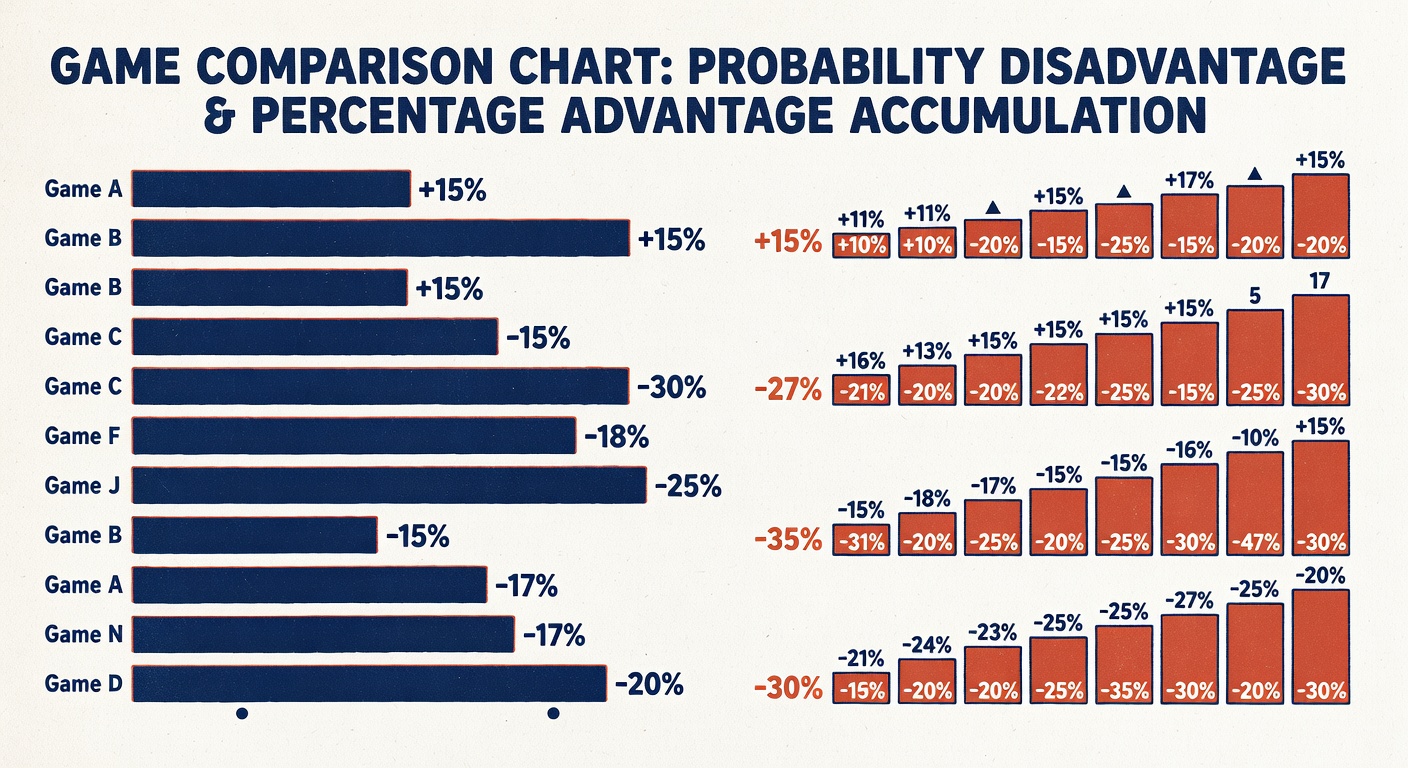
Ranked by Player Odds
Best house edge (easiest for players): Video poker (99% to 99.5% payout, if you play perfectly), blackjack (0.5% house edge with basic strategy), craps (1.4% on line bets), baccarat (1.06% on banker).
Middle tier: European roulette (2.7% house edge, because it has only one zero), three-card poker (3.37% house edge), Caribbean stud (5.3% house edge).
Worst house edge (hardest for players): American roulette (5.26% house edge), keno (25% to 40% house edge), slot machines (varies by law, often 5% to 15%, sometimes higher).
The house edge is not punishment. It is the cost of playing in someone else's house.
Casino managers know their edges down to the thousandth of a percent. They run decades of data. The Borgata tracks how many blackjack hands are dealt each day, how many double-downs occur, how much is won and lost. The actual return matches the theoretical return, month after month. The math works. Always.
The Gambler's Misconception
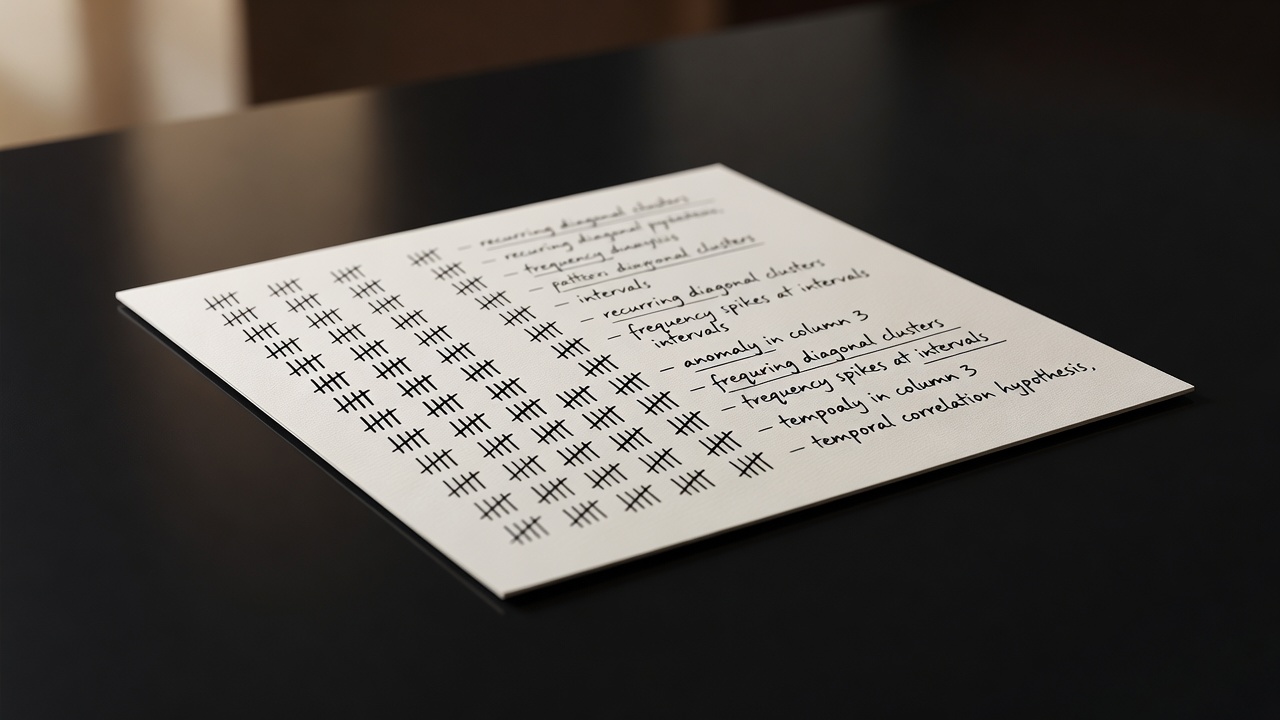
Some players believe they can beat the house edge through discipline or luck or pattern recognition. The woman at the Borgata had lost forty-seven thousand dollars in one session and was convinced she would recover it if she played longer. She could not see that the edge was grinding her account down predictably, mathematically, without malice. The casino was not cheating her. It was simply waiting for the law of large numbers to do its job.
The house edge is why casinos are open 24 hours. They do not fear you winning in the short term. They know that if you keep playing, the edge will collect. Thousands of players, thousands of decisions, billions of dollars wagered. The edge compounds. It fills the resort, pays the staff, funds the renovation of the gaming floor. The house edge is the entire business model.