CLAIM: The Six Card Bonus pays well for strong hands, so the expected value should be close to fair.
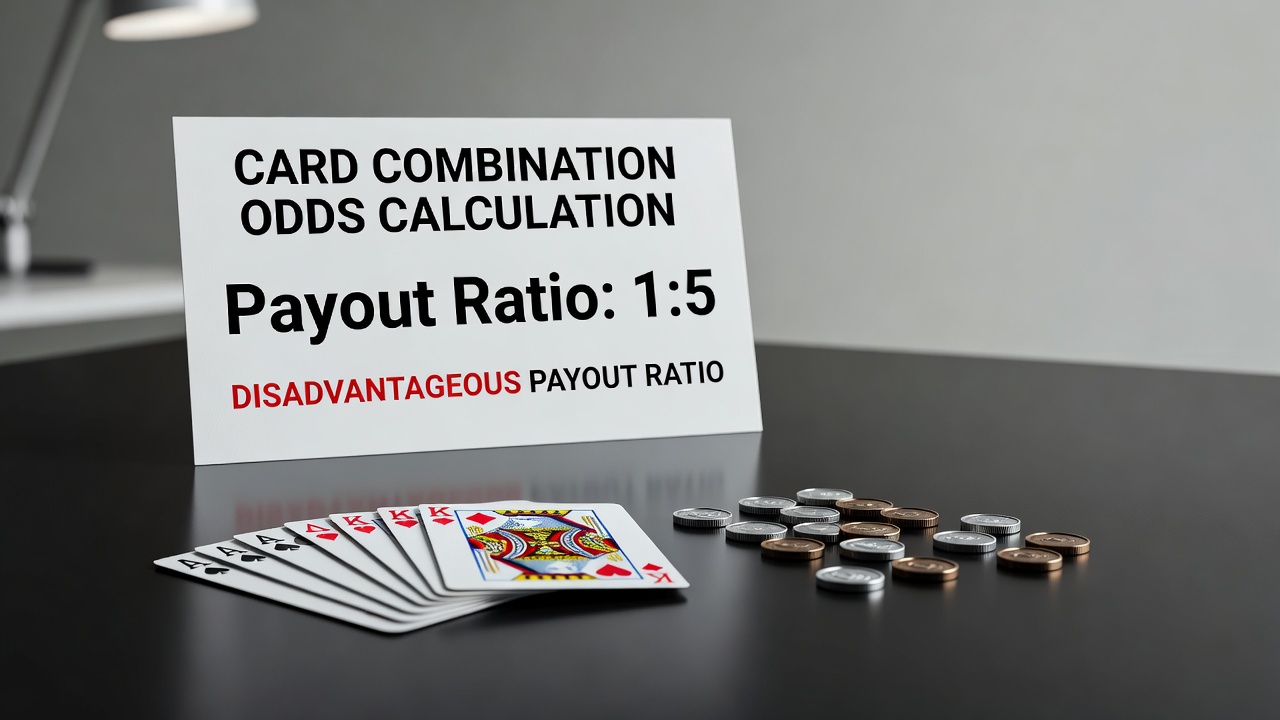
REALITY: The Six Card Bonus carries a house edge of approximately 10.8 percent. This is among the worst side bets available in casinos. To put it in context, Three Card Poker's main game carries a house edge under four percent. The bonus is designed to feel generous while being mathematically brutal.
How does it work? You make a base bet on Three Card Poker. You also make an optional side bet on the Six Card Bonus. The dealer reveals their hand. You receive two additional community cards. Your hand is now made from your three cards plus the dealer's three cards, and you can form a hand from any six cards, choosing the best five. The payout structure: a straight flush pays 5-to-1, a full house pays 4-to-1, a flush pays 3-to-1, a straight pays 1-to-1.
The payout looks generous compared to traditional five-card poker. In standard poker, a flush might pay 3-to-1 and a straight might pay 1-to-1. The casino is offering what appears to be competitive compensation for strong hands. But the probability of making those hands from six cards is substantially higher than the payout justifies. The house edge emerges from this gap: more players make strong hands than the odds compensate for.
The Probability Problem
You have six cards to work with. You're selecting your best five-card poker hand. This is a massive advantage over traditional five-card poker. The probability of hitting a straight, a flush, or better climbs dramatically. A professional poker player running Kelly staking on this bet would calculate the discrepancy between hand probability and payout, then determine the edge.
The numbers: roughly two percent of Six Card Bonus wagers result in straights or better. The payout for a straight is 1-to-1. That's fifty dollars paid on a fifty dollar bet, meaning you break even on the straight. But by the time you account for the probability of all stronger hands (which pay better but hit less frequently), the expected value trails the cost of your bet by about 10.8 cents on every dollar wagered.
A player betting $100 per hand on Six Card Bonus, playing two hands per minute, eight hours per day, loses approximately $864 per day to this edge. Over a year, playing conservatively, a casual player would lose roughly $300,000 in expectation.
Why Casinos Push This Bet
The Six Card Bonus feels like a good value because you're working with six cards instead of five. Your intuition correctly registers that six cards creates more possibilities. Your intuition fails to adjust the payout ratios to match the new probability distribution. The casino understands this psychological blind spot intimately.
Compare the house edge on Six Card Bonus (10.8%) to other side bets: Caribbean Stud Poker bonus (5.4%), roulette (2.7%), blackjack (0.5%). The casino makes substantially more money per wagered unit on the Six Card Bonus than on almost any other bet on the floor. This is why dealers push it. This is why the sign lights up. The casino's profit per dollar wagered is maximized.
The Real Cost of the Bet
Many recreational players split their bets: $50 on the main game, $25 on the Six Card Bonus. This dilutes their bankroll and increases their total house edge. On the main Three Card Poker game, they're paying 3.5% edge. On the bonus, they're paying 10.8%. The weighted average depends on the split, but they're clearly overpaying across both wagers.
A better strategy: if you want to gamble on Three Card Poker, place your full bet on the main game. Skip the bonus entirely. If you're looking for more action, move to a different game with a better edge. The Six Card Bonus exists to extract money from players who can't do the probability math. You can. Don't fall into this trap.