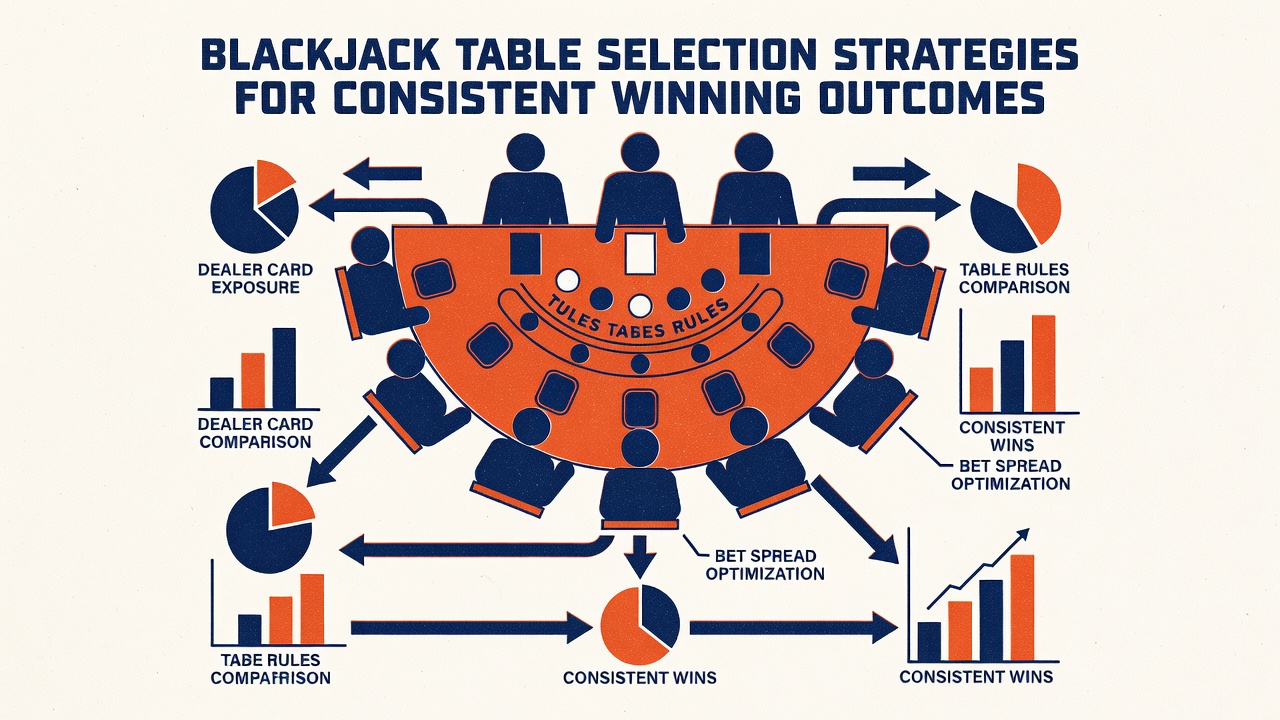
Here is the thing about blackjack that everyone talks about but nobody acts on: the rules matter more than skill. You can play perfect basic strategy at a terrible table and lose faster than a mediocre player at a good table. So before you sit down, you need a checklist.
The Big Rules First
Start with the payoff on blackjack. This is the most important line item. Blackjack (a natural, ace plus ten-value card) pays either 3:2 or 6:5. At 3:2, you win $1.50 for every $1 wagered. At 6:5, you win $1.20 for every $1 wagered. The difference is 1.39 percent of your expected value. That is enormous. A $50 bet at a 3:2 table costs you roughly $0.25 per hand in house edge. At a 6:5 table, it costs you $0.70. Over four hours of play, six hands per hour, that is the difference between losing $60 and losing $168. Never, ever play 6:5 blackjack. Period.
Next: hit or stand on soft 17? The dealer stands on soft 17 (A-6, totaling 17). This is good. The dealer hits on soft 17. This is bad, for you. If the dealer hits soft 17, the house edge goes up 0.2 percent. You want the dealer to stand.
The Secondary Rules
Can you double down on any total? Yes is good. Limited to 10 or 11 only is worse. Doubling down increases expected value because you want to double when you have advantages.
Can you split aces and eights? Yes, you want to split aces (always) and eights (against weak dealer cards). If the table restricts doubling after split, the edge gets worse for you.
Can you double after split? Yes is better. No is worse.
Surrender? This is a secondary consideration, but early surrender (before dealer checks for blackjack) is valuable, late surrender less so. Many tables do not offer surrender at all, which is fine.
The Online Wrinkle
Online blackjack changes the equation because it is fast. You might play 150 hands in one session. Table selection becomes even more critical because the volume magnifies the edge. A 0.5 percent difference in house edge, multiplied across 150 hands at $25 stakes, is $187.50 in expected losses. Find a good table.
The Practical Scoring System
Score each table as you scout it. 3:2 blackjack payoff: plus-2 points. Dealer stands on soft 17: plus-2 points. Double on any total: plus-1 point. Split aces and eights: plus-1 point. Double after split allowed: plus-1 point. Subtract points for each rule you do not like. An ideal table scores 7 points. Anything below 5, keep walking.
The House Still Wins
Remember this: even at the best possible table, with perfect basic strategy, you are facing a house edge of about 0.5 percent. You will not beat this long-term. What you are doing is optimizing your expected loss. You are choosing to lose slowly rather than quickly. That is the entire game. The best table just means your money lasts longer. Use that time to have fun, not to convince yourself you are going to get rich.