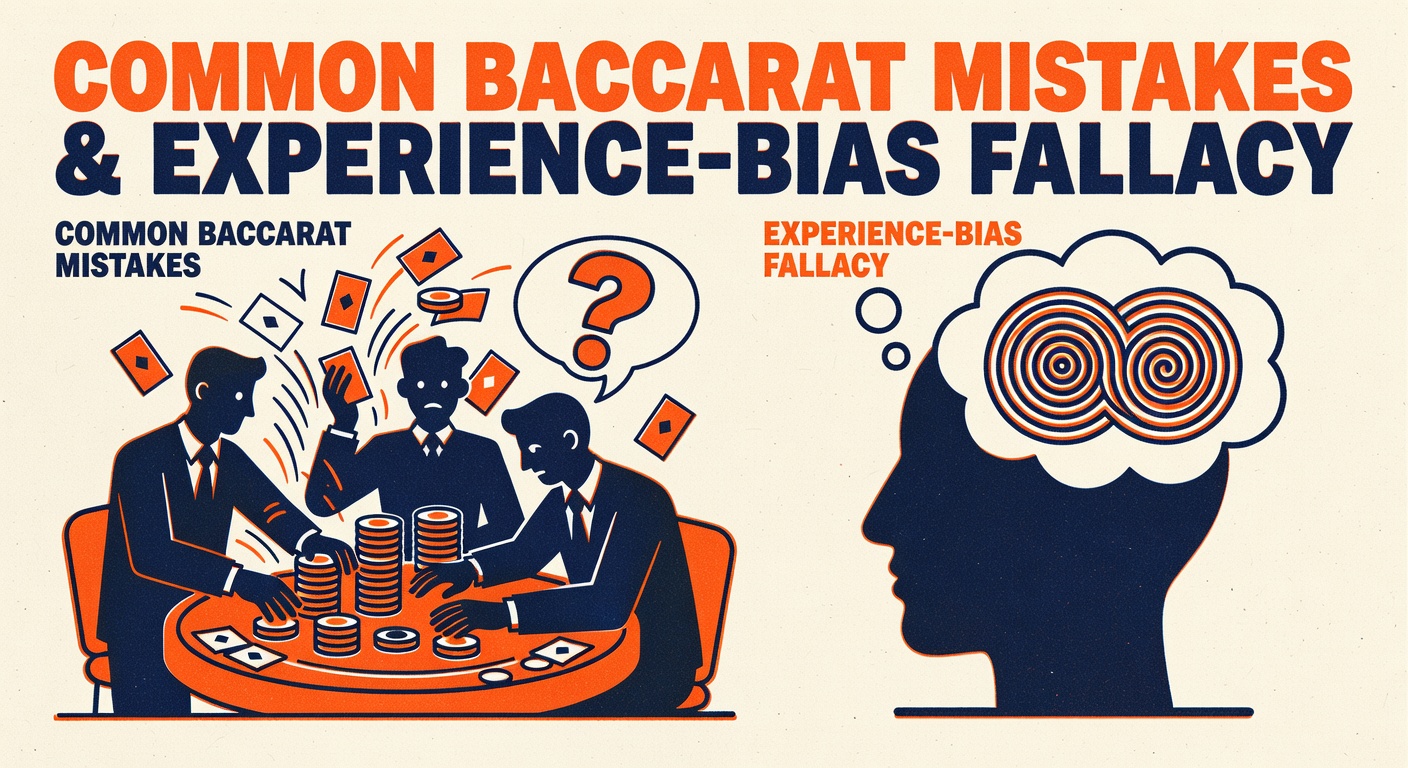
There is a peculiar arrogance that accumulates in the baccarat player after two thousand hands. The player has observed patterns, made small profits through discipline, perhaps read a book on shoe-reading or pattern recognition. They have convinced themselves that there is skill in baccarat, or at least advantage-play, when in fact baccarat is a game of mathematical certainty masquerading as chance.
Mistake One: Betting the Tie
The Tie bet in baccarat, where the Banker and Player hands total the same, occurs in approximately 9.55 percent of hands. The house pays 8 to 1 on a Tie, which corresponds to a 14.4 percent house edge. An experienced player knows this mathematically and avoids it. Yet even experienced players will occasionally place a Tie bet after observing, say, two consecutive Ties in a shoe of a hundred cards. They reason that Ties are "coming in clusters." This is the gambler's fallacy. Each hand is independent. The previous Tie makes the next Tie neither more nor less likely.
Mistake Two: Tracking Shoes and Betting on Breaks
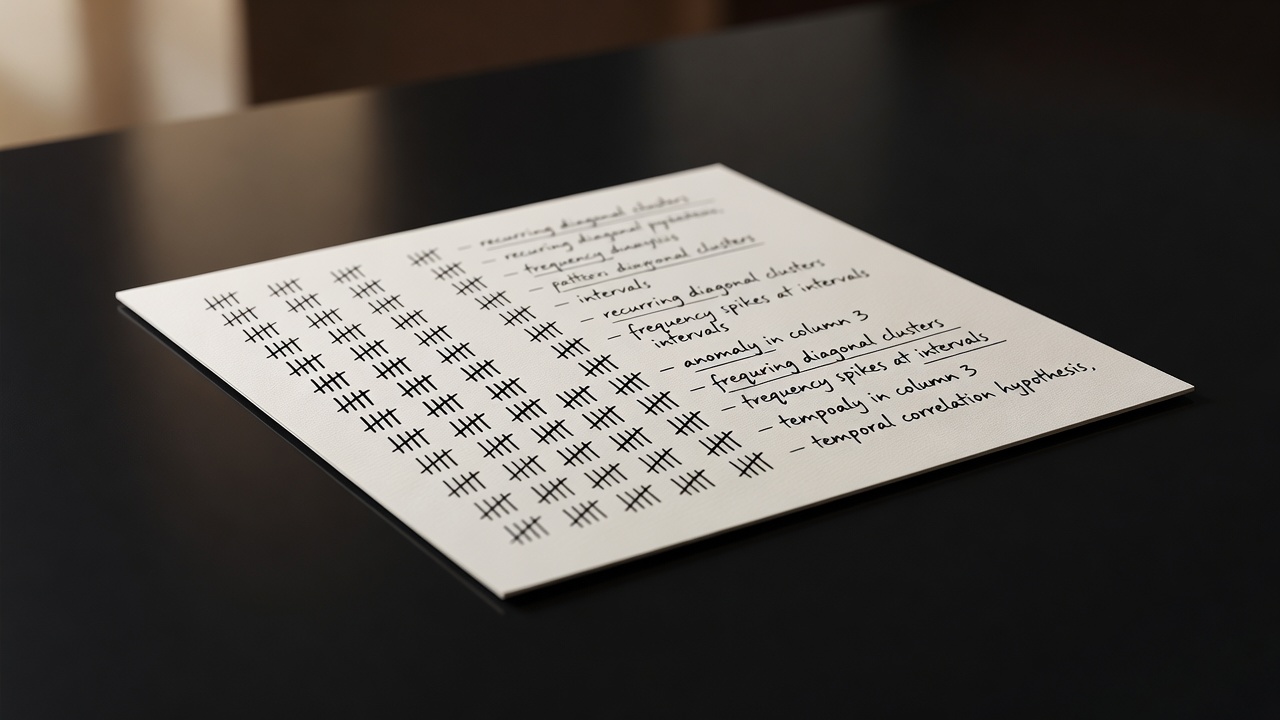
A shoe is a collection of decks shuffled together, usually six or eight decks, creating approximately 416 cards of play before reshuffling. Some experienced players track the results, marking which side (Banker or Player) has won the most hands, and assume a "break" is coming, a shift in which side is winning. This belief that past results predict future results is mathematically indefensible. The composition of the remaining cards has marginal impact on the next hand's outcome, and that margin is already priced into the house edge.
Mistake Three: Increasing Bets After Losses
A disciplined player establishes a bet size and sticks to it for, say, a session of a hundred hands. A loss of $5,000 over the first sixty hands creates an emotional weight. The player reasons that variance must work in their favour eventually, and so increases to $2,000 per hand for the remaining forty hands. This is the classic loss-chase. The house edge does not diminish as you lose; it compounds. Each additional dollar wagered adds another 1.06 cents of expected loss.
Mistake Four: Switching Between Banker and Player Based on Intuition
An experienced player develops a feel for the game. They "sense" that the Banker is due, or the Player is hot. They place bets accordingly. This is pattern-seeking in randomness. Baccarat has no true randomness; it is deterministic from a shuffled deck. But the deck is sufficiently mixed that the player cannot predict the next card better than chance would allow. Their intuition is their subconsciousness running pattern-matching on random data, which is worse than useless; it adds overconfidence to mathematical disadvantage.
Mistake Five: Believing in Bet Progression Systems
Systems like the Martingale (double your bet after each loss), the Fibonacci sequence, or the Labouchere method are attractive because they offer a narrative: follow this sequence and variance will eventually reward you. Mathematically, these systems are simply rearrangements of bet size over time. A Martingale still expects to lose 1.06 percent per hand in expectation. It only concentrates the losses into fewer, larger swings, increasing volatility without increasing edge. Yet experienced players, who should know better, adopt these systems because the narrative is seductive.
Mistake Six: Rationalizing Sessions and Cherry-Picking Results
After a session in which the player is down $8,000 but gained $3,000 back, they claim a "good" session because they made a recovery. The comparison point has shifted. An experienced player begins to grade their play not by absolute expected value but by narrative coherence. A loss is "good" if it could have been larger. This rationalization prevents the player from accurately assessing their true expected loss rate.
The Fundamental Mistake
The greatest mistake that experienced baccarat players make is assuming that experience has granted them insight into a game that is, fundamentally, ruled by the mathematics of pure chance. The house edge is immutable. No observation, no system, no intuition changes it. Experience teaches the player how to lose money slowly instead of quickly, which is valuable only if the goal is to maximise the time spent losing money.
The experienced baccarat player should, at some point, accept this and walk away.