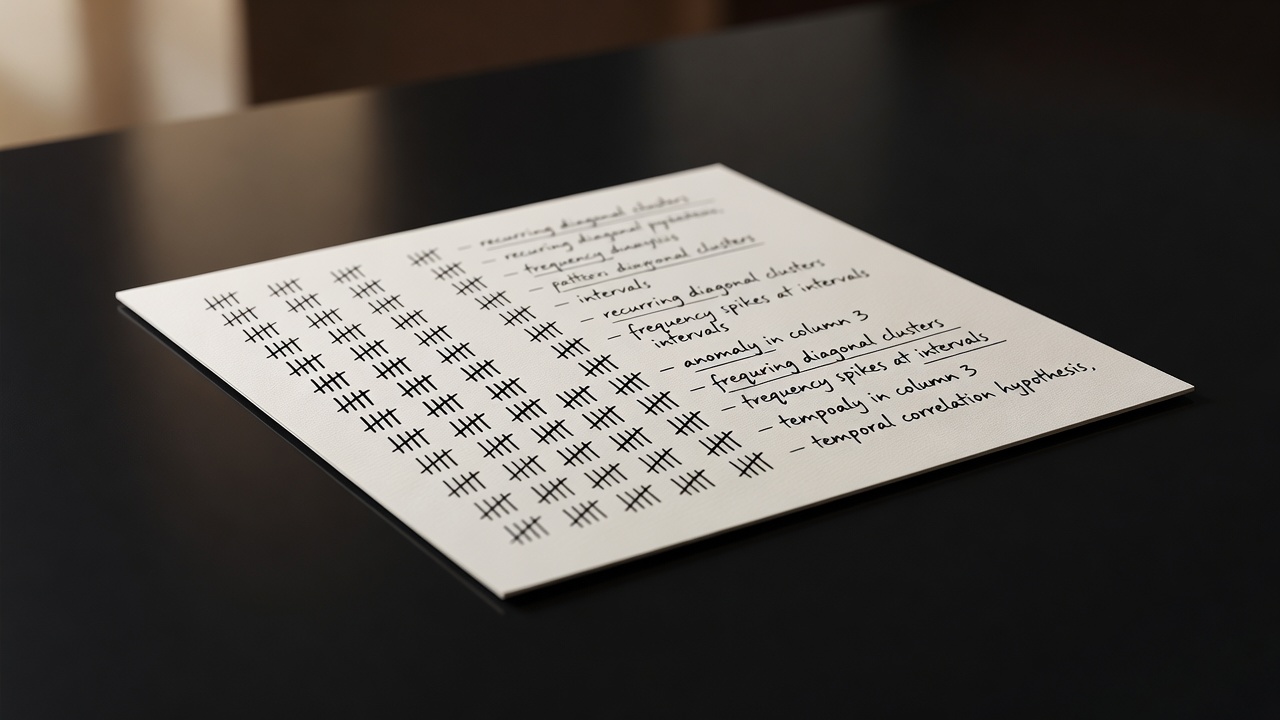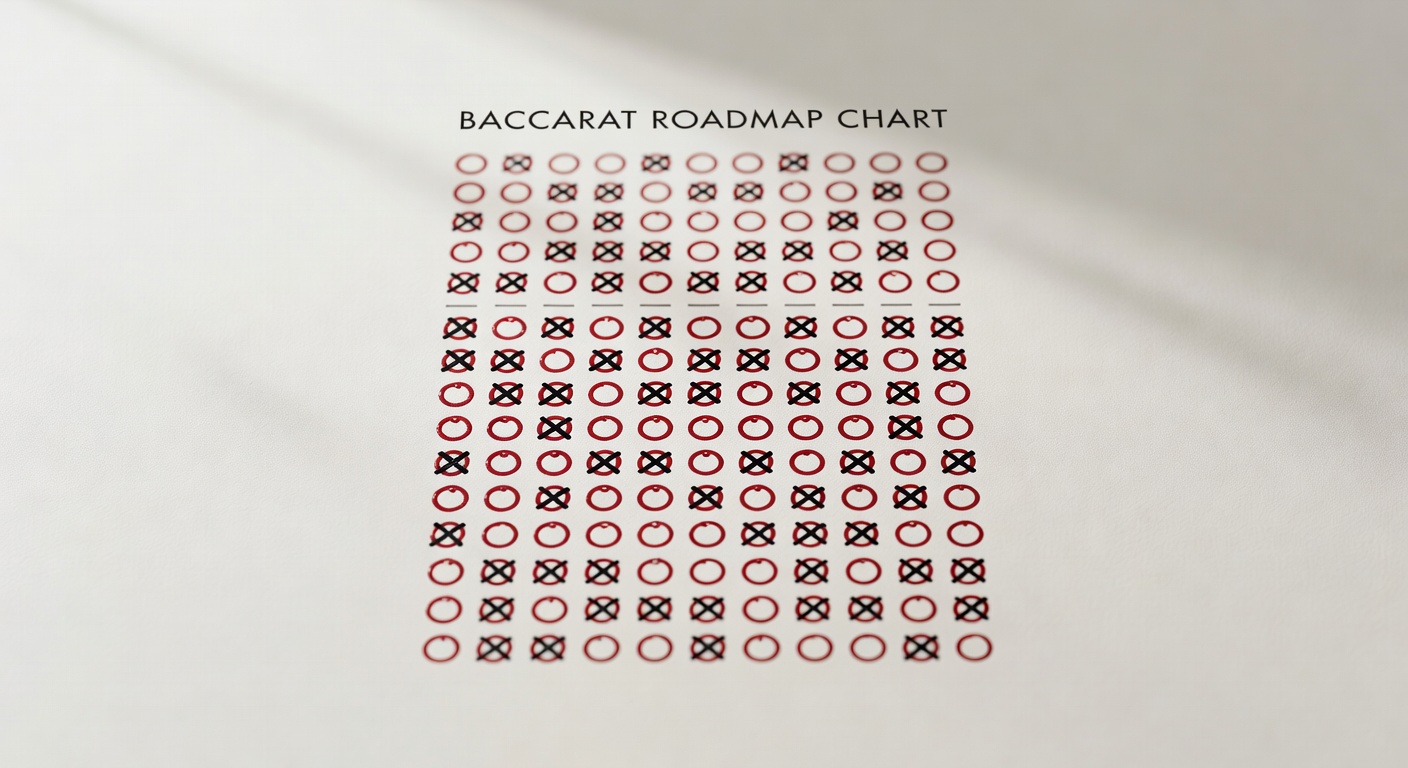
Here is my thesis. Baccarat roadmaps are a pleasure and a folk art, and they are also a small monument to our species' discomfort with true randomness. Tracking them does not improve your odds. It does, however, give the hand the rhythm of a story.
I am not especially bothered by this. I think the fact that we insist on writing the numbers down in colour-coded grids, even knowing the whole apparatus predicts nothing, is a tender and very human thing to do.
The Apparatus
There are five roadmaps in standard use in the live baccarat rooms that model themselves on Macau.
- The bead plate, which simply records the result of each hand (player win, banker win, tie), like a box score.
- The big road, which reorganises the bead plate into columns so that each new streak starts a new column and each continuation extends the current one.
- The big eye boy, the small road, and the cockroach road, which are derivative maps. Each one tracks a different aspect of the big road's pattern, essentially answering the question: is the current column's behaviour consistent with the neighbouring column's?
If that sounds complicated, it is because it is. The derivative roads are, in practice, a second-order commentary on the first-order chart. Whether a given mark on the small road is red or blue depends not on the outcome of the hand but on whether the big road is behaving like it did two columns ago. The maps comment on each other.
What They Cannot Do
Each hand of baccarat is, to a very good approximation, independent of the hands before it. The shoe is shuffled from eight decks; the house edge on the banker bet is 1.06 percent; the house edge on the player bet is 1.24 percent; the tie is a tax. Nothing that has happened in the previous ten hands, or fifty, or the current shoe in full, shifts those numbers by an amount worth betting on. The roads do not see around corners, because there are no corners. There is a flat beach.
This is well understood, and everyone who has ever explained baccarat in a textbook has said it, and it has not made the slightest dent in the practice. The roadmaps remain, on every digital scoreboard at every live baccarat table in every casino operating in the Macau mould, in their five-colour glory. People photograph them. People extend the patterns in their heads before betting.
What They Can Do, Which Is Not Nothing
The honest concession to the other side: the roadmaps make the game playable at a human tempo. Baccarat, reduced to its mathematics, is a coin flip with a house charge on every flip. A person cannot, temperamentally, sit for two hours flipping a coin. A person can sit for two hours watching a pattern develop. The roads are a scaffolding for attention, and attention is what keeps a player seated long enough to enjoy (or not) the experience they came for.
This is not a small contribution. It is the reason baccarat dominates the floor in places like the Galaxy and the Grand Lisboa while other flat-edge games languish. It is the reason the Big Eye Boy is printed on the score card and not quietly retired. People want a story, even an unreliable one.
There is also a genuinely useful side effect. Tracking the roads slows the pace of play. A player who is consulting his chart before every hand makes fifty fewer bets per hour than one who is slapping down chips on autopilot. Slower betting, in a negative-EV game, is cheaper betting. The roads are, by accident, a soft form of loss-rate throttling.
The Counterargument, And Its Reply
A patient counterargument runs as follows. We do not, the baccarat pattern-tracker will say, claim that the roads change the math. We claim only that a long shoe sometimes exhibits streaks, and that riding a streak (betting the banker as long as it keeps winning) is a sensible way to ride out variance with a reduced drawdown.
The first half of this is true. Shoes do exhibit streaks, because streaks are what random data looks like most of the time. A fair coin flipped four hundred times will produce a run of seven heads at some point, and someone will stand up at the table and say, see, a pattern. The second half (the claim that riding the streak helps) is the part that does not survive a clean simulation. A strategy of betting the last winner against a random selector has the same expected return. Both lose money at the same rate. The streak-rider loses it with more drama.
I have no particular problem with drama. If a player is going to lose 1.06 percent of their action either way, they might as well lose it while enjoying the colour-coded map. My only objection, and it is a quiet one, is to the pretence that the map is functional rather than decorative. The map is decorative. The map is lovely. The map is also, on a long Tuesday evening with a glass of ice water and a bead plate filling up slowly in front of you, a kind of meditation.
That, in the end, is what the roadmaps are for. Not prediction, but attention. Not edge, but structure. Baccarat does not need its roads to function as a game. The game, though, is more pleasant with them. I would not bet on that distinction. But I would note it.