I lost a lot of money. I do not know the exact number because at some point, keeping track felt like admitting something. Let me say it was more than I had and enough that it took years to rebuild. The worst part was not the money. It was how quickly it could disappear.
A blackjack session would start with $200. I was convinced it was disciplined. Two hours later, it was gone. I played fast. I did not track the wins and losses. I just kept betting until either I was ahead (at which point I would bet more thinking I was hot) or I was bankrupt.
The Protections That Matter
That is the trap of table games. Unlike slots, where you can set your bet per spin and it stays constant, blackjack and roulette let you change your bet every single hand. That flexibility is dangerous. Your emotions change every hand. Loss feels bad, so you bet bigger next hand to catch up. Win feels good, so you bet bigger to lock in the win. Neither of these is a decision. Both are impulses.
Here is what protecting a bankroll actually means, and I learned this the hard way:
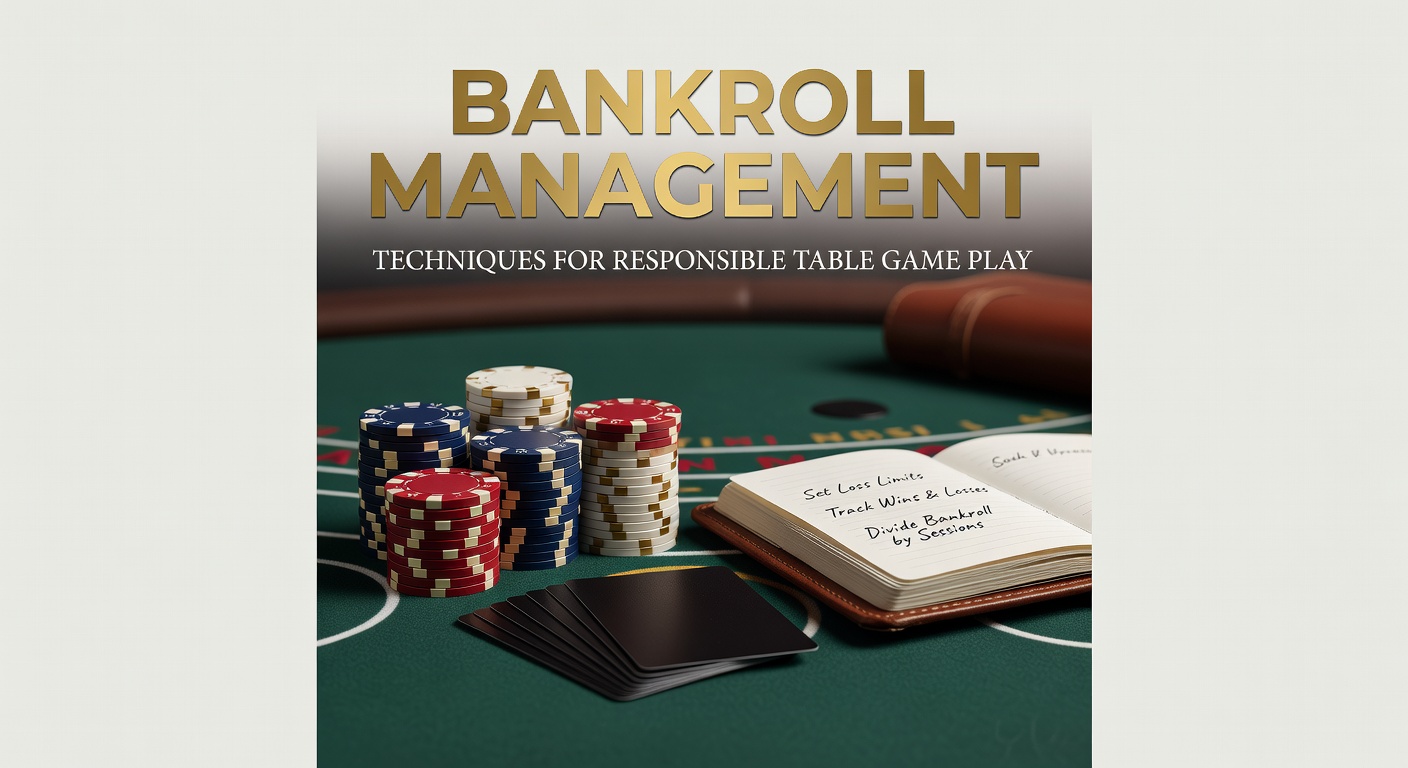
First: Separate your money physically. Your session bankroll is $100. That is the only money you bring to the table. Not $100 plus a credit card. Not $100 plus access to your savings. The hundred dollars is what can disappear. Everything else is inaccessible. This matters because when you lose the $100, you will feel the urge to reload. If the reload is easy, you will do it. If you have to go home and think about it, you might not.
Second: Set a fixed bet. Not a range. A fixed bet. $5 per hand. Every hand. Wins and losses both get $5 bets. This removes the impulse to chase or celebrate. It is boring. That boredom is the point. You want the game to be so mechanical that emotion stops affecting your decisions.
Third: Set a stop loss. If you lose 50% of your bankroll, you leave. Not let me play one more hand. You leave. For me, this meant losing $50 meant I stood up and walked away. It felt wrong at the time. It felt like I was quitting while I could still win it back. But that feeling is exactly the impulse that kills people. Chasing losses is how $100 becomes $500 owed.
The Long Game
Bankroll management does not change the math. It just means you lose slowly instead of fast. You have more hands. More time. More chances to get lucky. That is all it does. It does not beat the game. It just extends how long you can play.
For someone in recovery, or someone trying to stay disciplined, that extension matters. Slower loss means more time for the house edge to be the only thing beating you, not you beating yourself with bad decisions.
The key insight here is discipline. Most players skip this step because it requires thinking before playing, not during playing. But that is exactly when decision-making works best. When you are calm and thinking clearly. Not when you are at the table watching money move. The separation of decision-making from play is where advantage comes from. Play clean. Think first.