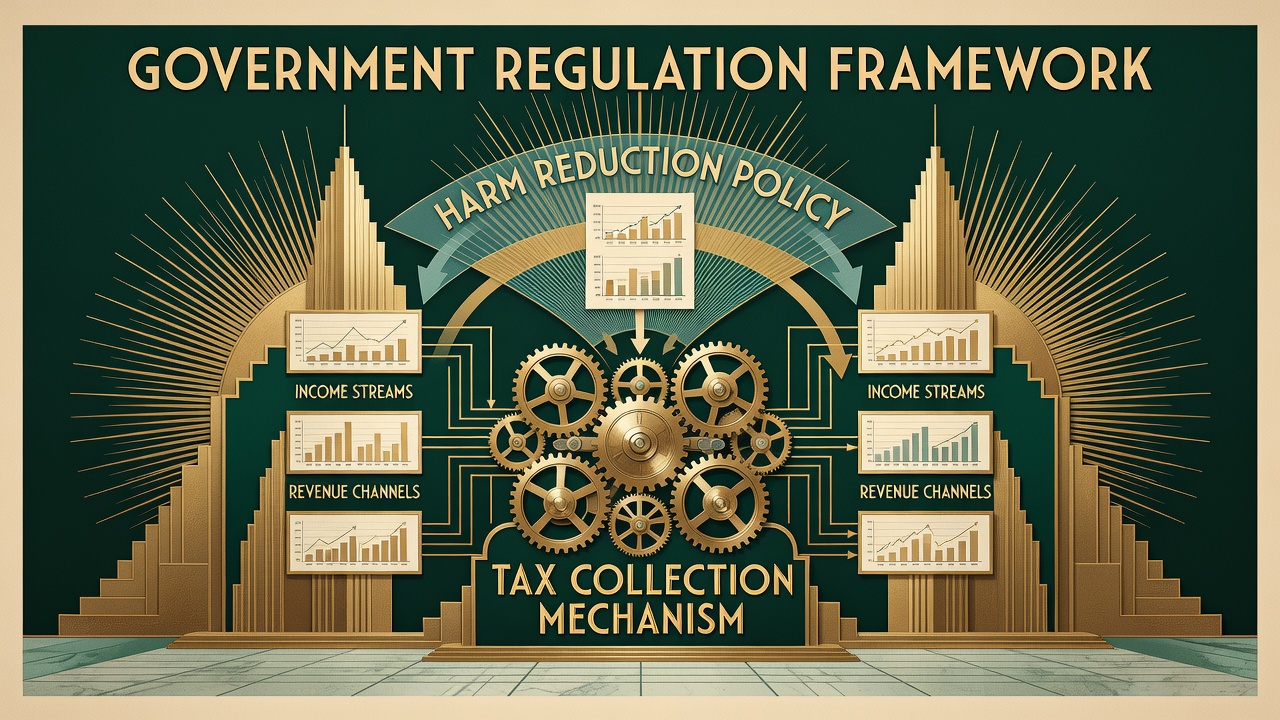
Online gambling regulation exists because the state wants to tax the activity and because the state believes it has a legitimate interest in reducing what it categorizes as harm. Neither goal is self-evident, so the regulation is worth understanding from first principles.
Consider the Austrian school view of gambling: the bettor is purchasing something real. A person who pays $100 to play a roulette wheel with a 2.7 percent house edge is purchasing a small lottery ticket, a moment of hope, and the pleasure of the game itself. The expected value is negative, but so is the expected value of going to a movie or eating at a nice restaurant. Subjective value is not reducible to expected monetary return. The bettor knows the math worse than the house, on average, but that does not mean they value the transaction less. They prefer the certainty of entertainment now to the certainty of the dollar later.
From this perspective, regulation requires justification. The state is restricting consensual transactions between adults. Why? The standard answers are taxation and harm reduction.
Taxation
The first reason is straightforward: money. A US state with legal online gambling collects 15 to 25 percent of operator revenue in taxes. That is real revenue, flowing to schools or roads or whatever the state decides. Nevada has built significant infrastructure on gaming taxes. Australia collects billions annually. The state has a direct economic interest in licensing gambling within its jurisdiction, collecting taxes, and preventing unlicensed operators from eroding the tax base.
This is not paternalism. It is pure fiscal interest. The state has decided that if gambling will happen (and it will, with or without permission), better to collect 20 percent of it than 0 percent.
Harm Reduction
The second justification is that gambling harms some people, and regulation can reduce that harm. A small percentage of gamblers become problem gamblers. The gambling losses exceed their income. They borrow money. They experience psychological distress. Their families suffer. From a utilitarian perspective, the state can reduce total suffering by restricting access, raising prices (through taxes), and funding treatment.
The Austrian response is that this rationale applies to all consumption. A small percentage of people become alcoholics. Some people overeat. Some people overspend on luxury goods. Yet the state does not ban movies or fine dining; it recognizes that the pleasure of the majority outweighs the harm to the minority. Why is gambling different? The answer, if honest, is arbitrary. Gambling is singled out, historically, because of religious and moral frameworks that treated it as uniquely corrupting. The modern rationale is harm reduction, but the original impulse was Puritanism.
How Regulation Actually Works
In practice, regulation means: a license is required to offer gambling services in a jurisdiction. The license comes with obligations. The operator must verify identity (KYC, know-your-customer), screen for money laundering (AML), maintain segregated player funds, submit to audits, and report to the regulator. The operator pays a license fee and a tax on revenue. In exchange, the operator gains a monopoly on legal gambling in that jurisdiction.
The player benefits from this (theoretically). A licensed operator is audited regularly. The RNG is tested. If the operator goes bankrupt, player funds are protected because they are segregated. Complaints have a formal process.
The player also loses, in the Austrian view. They can only gamble with licensed operators, who are by definition expensive (they must pay license fees and taxes). The unlicensed operator in Curacao or Malta, operating with zero overhead and zero taxes, can offer better odds. The player, barred from that operator, faces higher costs.
The Fragmentation Problem
Online gambling is regulated by jurisdiction. The US has no federal regulation; states choose to license or not. The EU has the same patchwork. Some jurisdictions are strict (UKGC, MGA), others permissive (Curacao, Anjouan). This means an operator can shop for jurisdiction, licensing in a permissive place and serving strict places illegally. The player in a strict jurisdiction is, from one angle, protected, and from another angle, restricted.
The Deeper Question
Ultimately, the question is: does the state have the right to restrict preference satisfaction by adults, even when the preferences are self-destructive? The Austrian answer is no, with minor exceptions (preventing fraud, theft, violence). The utilitarian answer is yes, if the aggregate harm reduction exceeds the aggregate pleasure reduction. There is no synthesis here. The disagreement is foundational.