Slot design is a loop. Spin. Wait. Outcome. Emotional feedback. Repeat. The designer's job is to make the loop sustainable. High volatility slots and low volatility slots use different feedback schedules to accomplish this.
First, the mechanics. Volatility measures the variance between the RTP (return to player) and the actual payout distribution. A low volatility slot with 96 percent RTP might pay out winnings on 35 percent of spins. Lots of small wins. A high volatility slot with the same 96 percent RTP might pay out on only 12 percent of spins, but when it does, the payout is large.
Both arrive at the same mathematical return. The path differs. This is the whole design question.
The Low Volatility Experience
Low volatility slots use what game designers call a "gratification schedule." You spin. You lose 2 dollars. You spin. You win 3 dollars. You spin. You win 1 dollar. You spin. You lose 3 dollars. The feedback is frequent. You stay engaged because the reward signal keeps firing.
Psychologically, this leverages the variable ratio schedule discovered by Skinner. Pigeons pressing a lever for occasional corn pellets keep pressing. Humans spinning for occasional wins keep spinning. The variability matters; consistent rewards become boring. But consistent losses feel punishing. Low volatility slots split the difference. Frequent rewards keep the habit loop active. Most rewards are small, but the scale is human. Ten dollars wins feel real.
These are retention hooks. A player with 100 dollars can play low volatility slots for an hour or more. The money bleeds away slowly. The experience is grinding, not dramatic. This is the "session length" optimization.
The High Volatility Experience
High volatility slots use a "climax schedule." You spin. Lose. Lose. Lose. Lose. Lose. Lose. Lose. Lose. Lose. Lose. Win big. The experience is drought punctuated by lightning. This is closer to actual gambling narratives. Most hands in poker lose. The pots you win are substantial.
High volatility is designed for players who value the hit more than the time. Thirty minutes, 100 dollars, one big win, or three small losses, then exit. The player is chasing the moment, not the session. Slot companies call this the "moment of juice." A design that optimizes for juice uses high volatility.
The psychological mechanism is loss aversion combined with hope. You endure the losses because hope is renewable. Every spin could be the big one. This is prospect theory in action. You are not playing for mathematics; you are playing for narrative. The story is: I endured a drought, then I hit.
Slots as Skill Expression
Neither approach is morally superior. They are systems optimized for different player archetypes. Consider a player with limited time but adequate capital. High volatility is rational. She plays thirty minutes and either loses 100 dollars or wins 500 dollars and leaves with a story.
Consider a player with limited capital but unlimited time. Low volatility is rational. He plays three hours on 40 dollars of loss exposure. He experiences dozens of wins, small and medium. The losses feel less final because he won something just twenty minutes ago.
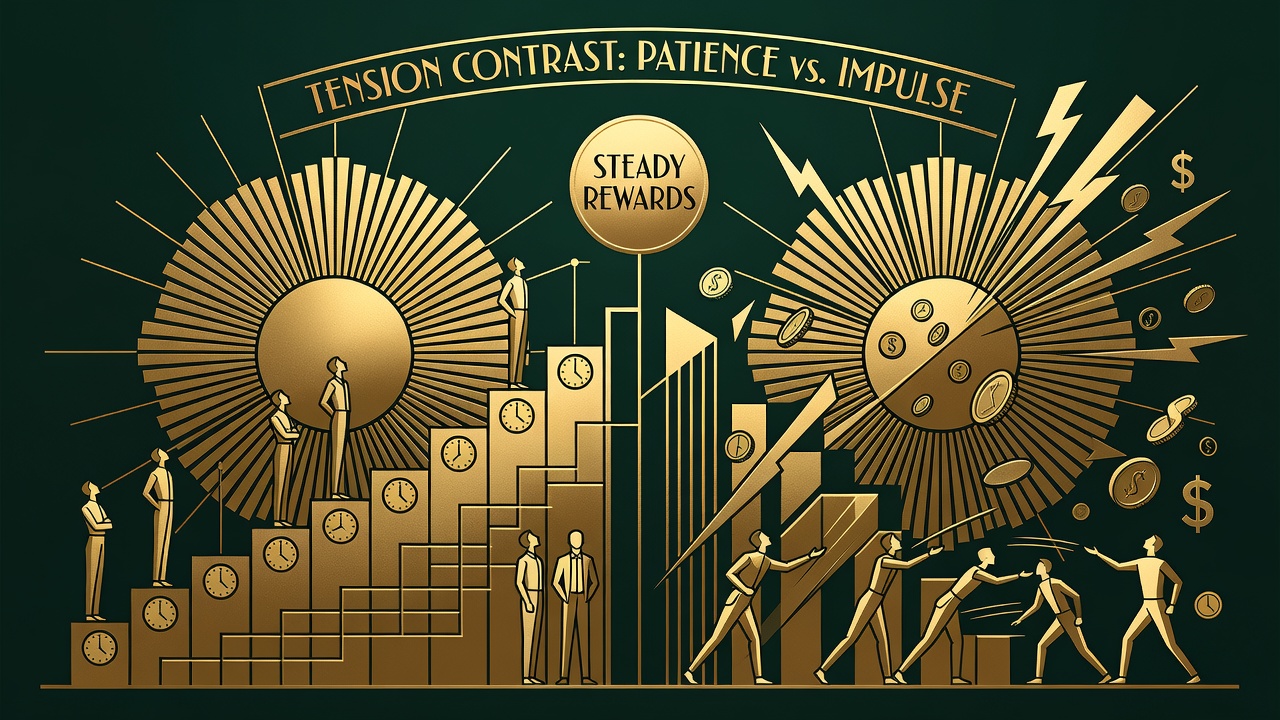
The design insight is that volatility maps onto player psychology. The game is not the slot. The game is the interaction between slot and player. Changing volatility changes which players engage and which exit.
The House Edge
Importantly, both approaches generate the same house edge. Pragmatic Play and Aristocrat, the major suppliers, offer low and high volatility variants of similar titles. The math is identical. The retention differs. For the house, low volatility retains more play time, more spins, more data collection. High volatility retains players who come back chasing the hit.
Casinos often offer both. A player might play low volatility in the afternoon when drowsy and high volatility at night when alert and seeking stimulation.
Choosing Your Volatility
Start with your time horizon and capital. Limited capital, much time: low volatility. You stretch your bankroll. Limited time, adequate capital: high volatility. You maximize the chance of a story worth telling.
Consider your emotional baseline. If you are loss-averse, small frequent wins keep you calmer. If you are hope-driven, the grind of twenty consecutive losses will tilt you. Your volatility choice should match your temperament, not fight it.
The slot machine is designed. Every element serves a purpose. Volatility is not random. It is intention encoded as payout distribution.