
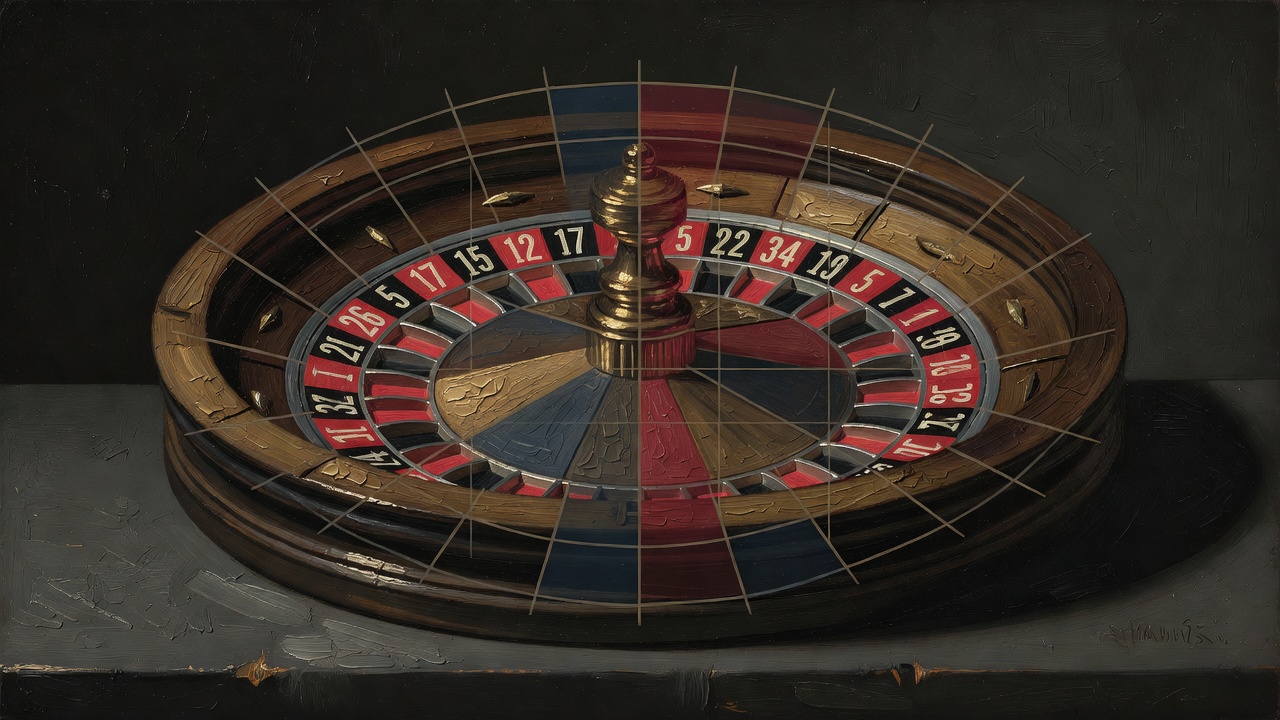
Thirty years running the floor at the Golden Nugget taught me one thing: sector betting feels like it's smarter than red-black. It's not. It's just slower bleed.
Sector betting is what people call it when they're too embarrassed to call it what it is: throwing more money at roulette in hopes that understanding the geography of the wheel will somehow matter. I've seen thousands of players adopt sector strategies. None of them won. Some of them felt smarter while losing, which is its own special kind of sad.
Here's what sector betting actually is: you identify a section of the roulette wheel, maybe twelve to fifteen adjacent numbers, and you bet on that section. Most common is betting the "dozens" (first twelve, second twelve, third twelve numbers). Another version is betting "neighbours," where you pick a number and bet on the numbers adjacent to it on the wheel. British operators love neighbours. The tourist thinks he's found a system. He hasn't.
The math is elementary. A roulette wheel has thirty-seven numbers in European roulette (zero through thirty-six). You cover twelve of them with your dozen bet. You're getting two-to-one payout on a bet with thirty-seven total outcomes. House owns thirty-two percent of the expected value on every spin. The neighbour bet is the same: you're covering five adjacent numbers (the picked number plus two on each side), getting twenty to one on a thirty-seven outcome game. House owns thirty-five percent.
This is fractionally better than straight-up bets on single numbers (which pay thirty-five-to-one on a thirty-seven outcome game), but worse than even-money bets like red-black (which pay one-to-one on roughly fifty-fifty odds, giving the house only 2.7 percent edge). Sector betting sits in the middle: worse than boring, better than stupid, and infinitely more seductive.
The Psychological Anchor
Why do people gravitate to sector betting? Because it feels like strategy. The wheel has a physical geography. If I understand that geography, maybe I can exploit it. Maybe the dealer spins slightly different every time. Maybe the wheel has a bias. Maybe, maybe, maybe. All nonsense. But the feeling of understanding something is worth the price of admission for most players.
I watched a regular named Eddie play neighbours for fifteen years. He'd identify clusters on the wheel, bet four or five numbers, and repeat. He was convinced the wheel at the Nugget had a slight bias toward his identified sector. It didn't. He just had a streak early on, won about twelve thousand dollars in a weekend, and spent the next fourteen years trying to replicate that weekend using "sector science." He lost four hundred and thirty thousand dollars against that twelve-thousand-dollar high.
The worst version of sector betting is what I call "tracking." Players watch which numbers have hit recently and bet on the sectors those numbers occupy. This is pure cargo cult superstition dressed up as observation. Numbers have no memory. If black hit five times in a row, the next spin is still fifty percent black. The fact that certain blacks occupy certain wheel sectors doesn't change that. But the tracking player feels like he's reading the game. He's not. He's reading tea leaves.
Roulette is maybe the only honest game in the casino because it doesn't pretend to be anything other than what it is: random number generation with a house edge baked in. Sector betting pretends it's something else.
Here's the truth I saw a thousand times from the pit: players who switch from red-black to sector betting don't win more. They lose differently. They lose slower, which feels like winning. They stretch their money longer, which feels strategic. But over two hundred spins, the sector bettor is down three percent of his stake. The red-black player is down 2.7 percent. The sector player feels smarter and loses more. The difference doesn't sound significant until you realize it compounds across every session for a decade.
The neighbour bet at Bet365 or DraftKings works the same way. You pick a number, bet on the neighbours, feel like you're leveraging wheel geometry. The RTP is identical to dozens betting. The house edge is identical. You are not outsmarting the wheel. You are not reading bias. You are not exploiting anything except your own willingness to pay an extra half-percent for the feeling of sophistication.
I retired from the Nugget in 2012 with a pension and the knowledge that I never saw a sector betting strategy that worked. Not once. I saw winners who sector-betted, sure. But I also saw thousands of losers who sector-betted harder and longer than they would have bet red-black, convinced they were learning the game when they were just slowly donating their money to the house with extra steps.
Written by
The BonusCasino Counter
The desk name on every BonusCasino guide, not a person. Guides are drafted with AI tools from terms and sources we read first, then checked by code against them before they go up.
How we write guidesBefore you claim
Multiply the bonus by the wagering requirement, then check the max-bet rule. If the daily play it needs is more than you'd bet anyway, skip the offer.
Keep reading
 Roulette