
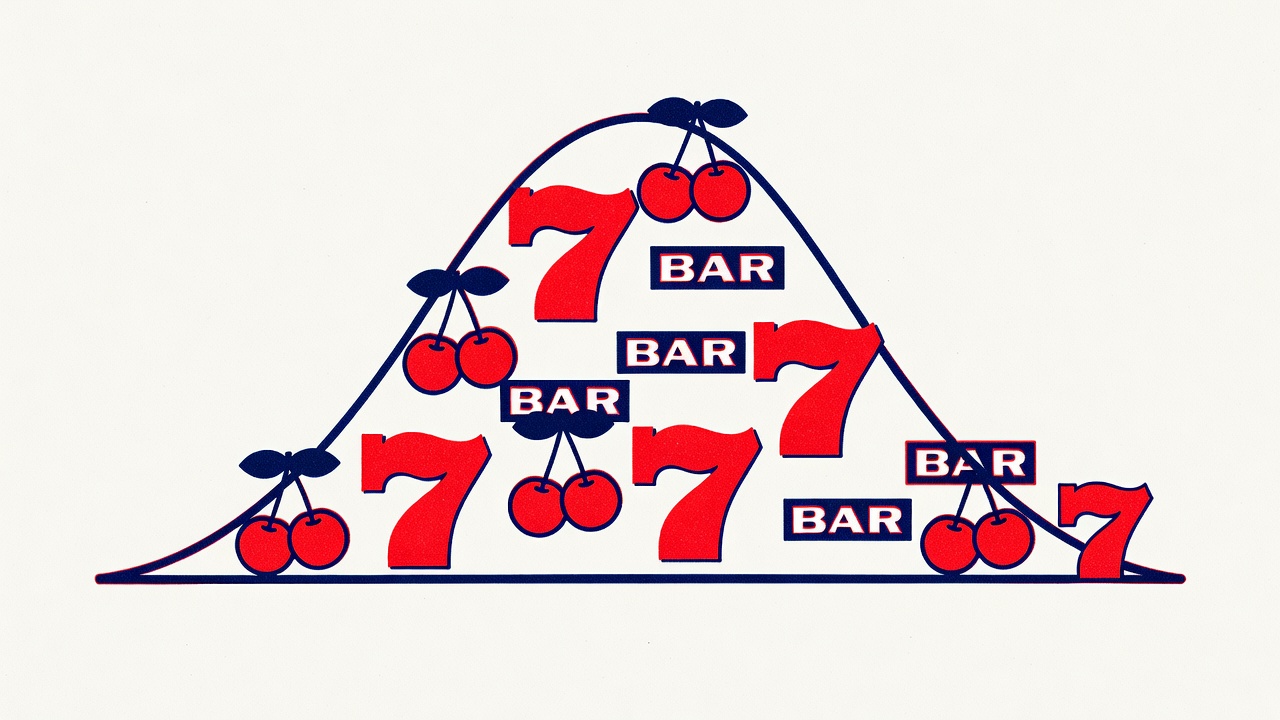
The game promises thousands of ways to win. What the math actually delivers is different. Megaways slots appeal to our pattern-seeking brain, but the effective return often underperforms the headline percentage.
You buy a lottery ticket. Two dollars. You know the odds are brutal, know the expected value is negative, yet you buy it anyway. Because for seventy-two hours, you get to imagine something different. You get to imagine cashing a check. Megaways slots work on the same currency of imagination, except they're engineered to extend that daydream across hundreds of spins, and here's the difficult truth: the effective return to player is often lower than players expect, despite the breathtaking reels and dynamic paylines.
The promise is immense. One Megaways game might advertise 117,649 ways to win on a single spin, or 1,048,576 on another. The number is designed to lodge in your brain like a song you can't shake. More ways to win sounds like better odds. It feels intuitive. Bigger denominator, better chance. But that's not how the payout structure works.
The Shape of Megaways Math
The total number of possible combinations is window dressing. What matters is the frequency and size of wins across those combinations. A Megaways slot might generate thousands of paylines, but the vast majority of them hit for small amounts or nothing at all. The big wins, the ones that create memorable stories and feed social media clips, happen rarely enough that the house edge persists.
Consider what happens when a reel can display anywhere from two to seven symbols on any given spin. Yes, that creates more combinations. But the developer has also reduced the payout for most outcomes. The headline RTP stays within regulatory range, usually between 94 and 96 percent, yet players experience something subjectively worse. Why? Volatility. Megaways games typically run high volatility. You spin for long stretches and see nothing but small hits or losses. Your bankroll shrinks steadily. Then, on spin 347, you hit four of a kind across a reel with six visible symbols, and you win back half of what you lost. The mathematics balances. The experience does not.
Providers like Pragmatic Play and Blueprint Gaming know this produces engagement. The mechanic of cascading reels, where winning symbols disappear and new ones fall into place, creates the psychological feel of momentum. Symbols that land and land again trigger the illusion of a special event. Yet behind the animation sits the same mathematical certainty: over time, you will lose the percentage the RTP dictates.
A standard three-reel slot with 25 fixed paylines can deliver wins more consistently. The smaller potential payouts hit often enough that your money lasts longer, and you can reasonably estimate your losses per hour of play. Megaways slots stretch that timeline through volatility manipulation. You feel like you are playing more, and playing feels like you are winning, until you stop and count the money you've spent.
The Competitive Advantage of Not Knowing This
The effective RTP slips below the headline rate in practice because players often hit the session exit point, cash out a partial win, or stop chasing before they've played enough spins for the law of large numbers to stabilize. A player might deposit fifty dollars, see their balance bounce between twenty and forty dollars for two hours, then quit up twelve dollars and feel lucky. The actual RTP of that session was higher than 96 percent. They experienced house edge working in their favor. That is the exception, not the reality of sustained play.
The game designer's advantage is that most players don't track expected loss per hour of play. They track session outcomes, wins and losses, luck and bad luck. A Megaways slot is structured to make losing feel like not losing, and that perception is the product being sold.
The more ways to win, the more ways to feel close to winning without having won anything at all.
This is not a flaw in the design. It is the design.
So why buy the ticket? Why play the slot? Because the math of probability and the human experience of uncertainty are different things entirely. You know, statistically, that a Megaways slot takes more than it gives. You know the effective RTP in practice is lower than advertised. And you play anyway, because for a few hours, you get to believe in something outside the equation.
That is not worse logic than the lottery. It is just more honest about what you're buying.
Written by
The BonusCasino Counter
The desk name on every BonusCasino guide, not a person. Guides are drafted with AI tools from terms and sources we read first, then checked by code against them before they go up.
How we write guidesBefore you claim
Multiply the bonus by the wagering requirement, then check the max-bet rule. If the daily play it needs is more than you'd bet anyway, skip the offer.
Keep reading
 Blackjack