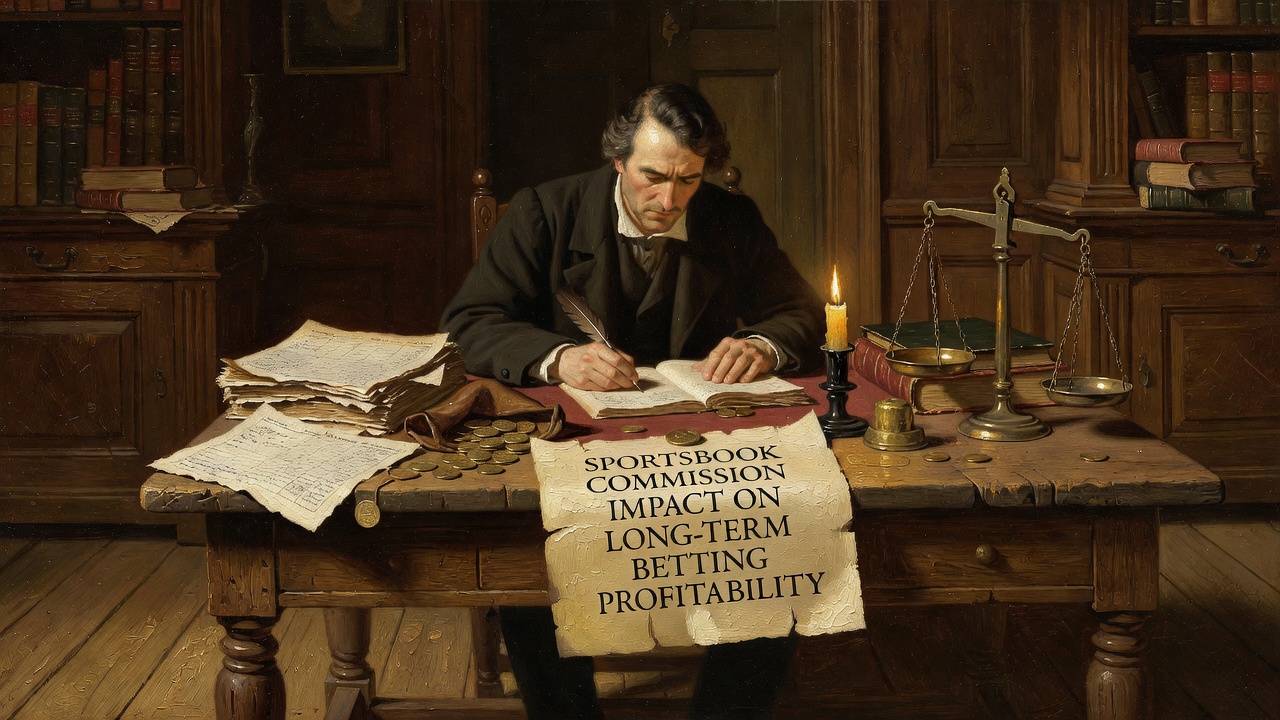
Vig. Juice. The house's cut. Every betting market has it, and it's the reason ninety-five percent of bettors lose money. You'll never see vig listed as a line item when you place a bet. It's baked into the odds.
Here's how it works, plain terms. A sportsbook offers you a football game at -110 odds both sides. That means you put down $110 to win $100 on either team. If you're right, you win $100. If you're wrong, you lose $110. The difference between your win and loss is the vig.
Mathematically: if you bet both sides, you wager $220 and get back $210. That missing $10 is the book's profit, their vig. In percentage terms, that's a 4.76 percent house cut on every dollar wagered. Over a full year of betting, that vig adds up.
Why Vig Beats You
A mug punter bets on fifty games in a season. Let's say he picks winners on exactly fifty percent of them (the break-even point for beating vig). He wins $100 on twenty-five bets, loses $110 on twenty-five bets. He ends the season down $250, despite picking games at exactly break-even accuracy. That's vig.
To beat vig and actually profit, you have to win more than the vig's margin. With -110 odds both sides, you have to win fifty-two or fifty-three percent of your picks just to break even after vig. Fifty percent is not enough. That's why casuals lose.
Now you understand why professional bettors are obsessed with finding "plus value." They're looking for odds that pay better than -110, which means lower vig. If a book is offering -105 instead of -110, that's better value. It means you only need to win 50.2 percent instead of 50.8 percent to break even long-term.
The Book's Real Edge
A sportsbook doesn't care who wins the game. They care about balancing action. If one team is getting hammered with money, the book adjusts the line to attract action on the other side. The goal is to have equal money on both sides. Then the book keeps the vig, win or lose. This is literally the business model.
This is why you should never follow the "sharp money" (the big professional bettors). By the time you see where the money is flowing, the line has already moved. You're chasing adjusted odds, not getting the original value.
How to Calculate Vig Yourself
Take the implied probability of both sides. If odds are -110 on both sides, the implied probability is: 110 divided by (110 plus 100), which equals 52.4 percent for each side. Two sides times 52.4 percent equals 104.8 percent. That extra 4.8 percent is the book's vig. Simple.
Better books offer reduced vig: -105 instead of -110. Some books offer "true odds" for certain sports, which is -100 or lower. That vig structure is tighter, meaning your breakeven rate is lower, meaning you have a fighting chance at positive expected value if you can actually pick winners.
The Honest Truth
Vig is why professional bettors focus obsessively on finding the smallest possible edge. A two percent long-term winrate beats the vig and produces profit. But you have to have the capital to absorb variance and the discipline to stick to picks where you have actual edge. Most bettors don't have either. They bounce between bets, chasing hunches, and the vig eats them alive.
If you're not actively calculating vig on every bet, you're flying blind. You think you're picking games. You're actually covering the book's vig first, and only the surplus (if there is one) is yours.