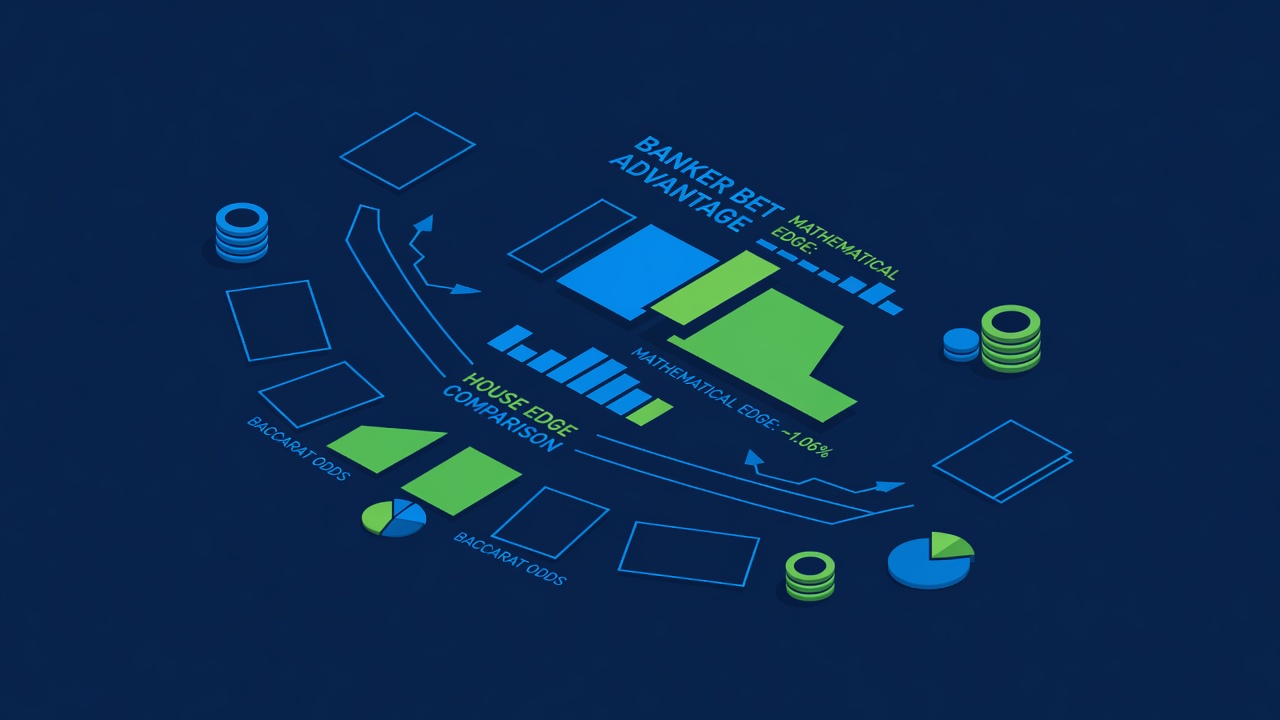
Baccarat, at its mathematical core, is a simple game. Two hands compete, Banker and Player, each trying to reach a point total closest to nine. The probabilities are fixed: the Banker wins about 50.68% of the time (excluding ties), the Player 49.32%, due to the drawing rules. This is not an opinion. The house edge emerges cleanly from the game's mathematics alone.
Now consider squeeze baccarat: the dealer's slow reveal of cards changes nothing about these underlying probabilities. Zero. The expected value remains identical. Therefore, its popularity demands explanation.
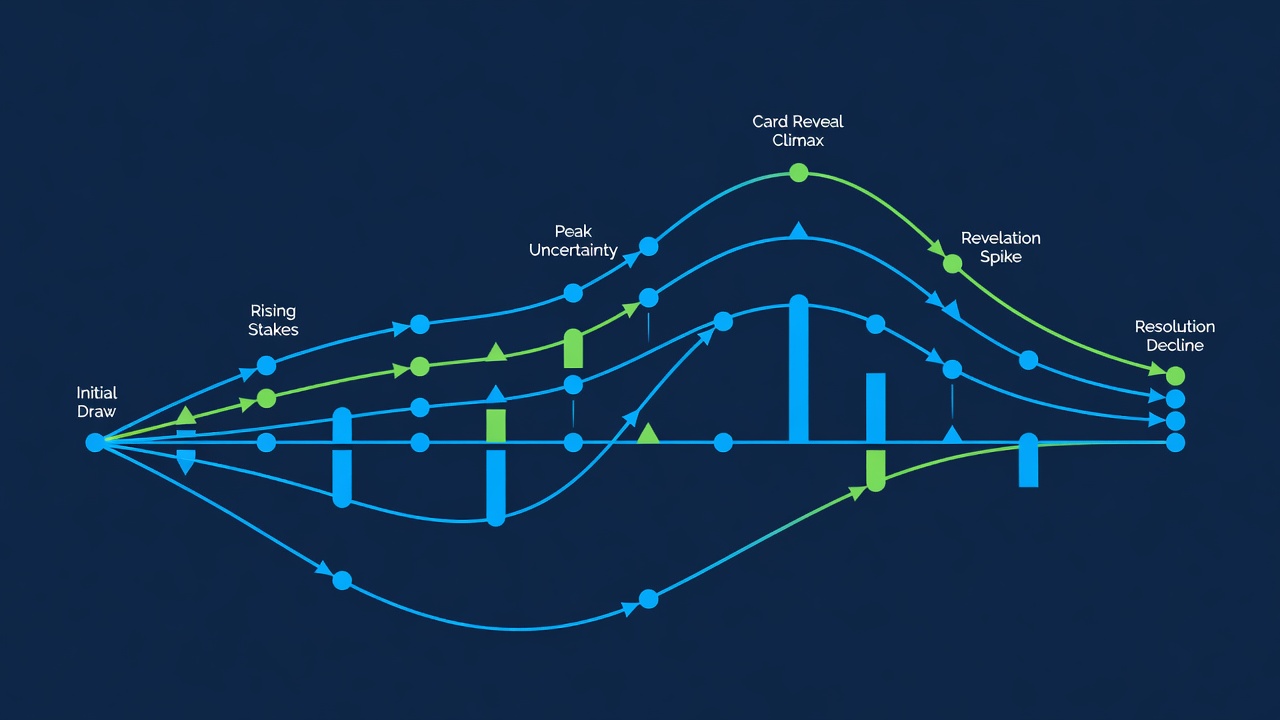
The answer lies in temporal psychology, not mathematical advantage. When a card dealer peels back a corner of the Banker's hole card in squeeze, revealing it millimeter by millimeter, the player experiences a sustained moment of anticipation. Their heart rate climbs. Cortisol floods the system. The rubber band of uncertainty stretches over thirty seconds instead of resolving in three. This is not pleasure from better odds. It is pleasure from delayed resolution.
The Mechanics of Information Delay
In standard baccarat, the dealer reveals both cards simultaneously. The outcome crystallizes instantly. But in squeeze, the ritual extends. Picture a live casino: a player requests the squeeze. The dealer shows them the card's back, then begins peeling. The camera zooms in. Every viewer watching online leans forward. The suspense compounds because there are usually watchers, and watching becomes collective.
Psychologically, this delay amplifies the emotional magnitude of the win. Research on anticipation shows that the pleasure of a positive outcome is proportional not to the outcome itself, but to how long it was anticipated. A hand that feels like it might go either way for thirty seconds delivers a larger neurochemical spike when it finally wins than a hand that was decided instantly.
Therefore, squeeze is popular not because it improves your odds. It improves the experience of betting, independent of mathematics.
Expected Value and the Illusion of Control
Some players report that the squeeze feels like it gives them agency. They can "read" the card as it emerges. This is illusory. The card's value is deterministic from the moment the shoe exits. No perception, no will, no superstition alters it. But the illusion of control is real, and it has measurable effects on player satisfaction.
The expected value of a squeeze baccarat bet remains:
- Player bet: -1.06% (negative, favoring the house)
- Banker bet: -1.06% (after accounting for the 5% commission)
- Tie bet: -14.44% (catastrophically worse)
The squeeze format may attract higher bet amounts or longer session lengths because of its theater. That can increase the house's absolute profit per player even though the per-hand edge stays constant. But for the player sitting at that table, squeezing their own card does not improve their probability of profit over any session longer than, say, 100 hands.
Why Casinos Profit From It
Casinos understand this. They promote squeeze baccarat in high-limit rooms specifically because it feels distinct, special, and controllable. The slower game naturally allows more time for dealers to manage the table. More time means more hands per hour become possible if other constraints (player speed, card shuffles) align. Slower reveals also create content for live-streamed games: squeeze moments are clippable, shareable, and build an audience.
Live casinos like Evolution Gaming and Pragmatic Play have integrated squeeze into their standard product precisely because it does nothing to the math but everything for retention and volume.
The Probability Is Still the Probability
If you are evaluating squeeze baccarat as a tool for wealth transfer, you must center mathematics. The return to player (RTP) is typically 98.94% for Player and Banker bets. After 10,000 hands at $100 per hand, expectation is a loss of roughly $10,600. The squeeze cannot change this. It can only change whether those 10,000 hands feel exciting or routine.
That distinction matters for human behavior. It does not matter for account balance.
Squeeze baccarat endures because it compresses gambling's essential appeal into a slower moment. The uncertainty remains identical. The pleasure amplifies. Casinos win the same per hand. You lose the same per hand. What changes is the texture of the loss, and for many players, that texture is why they return.