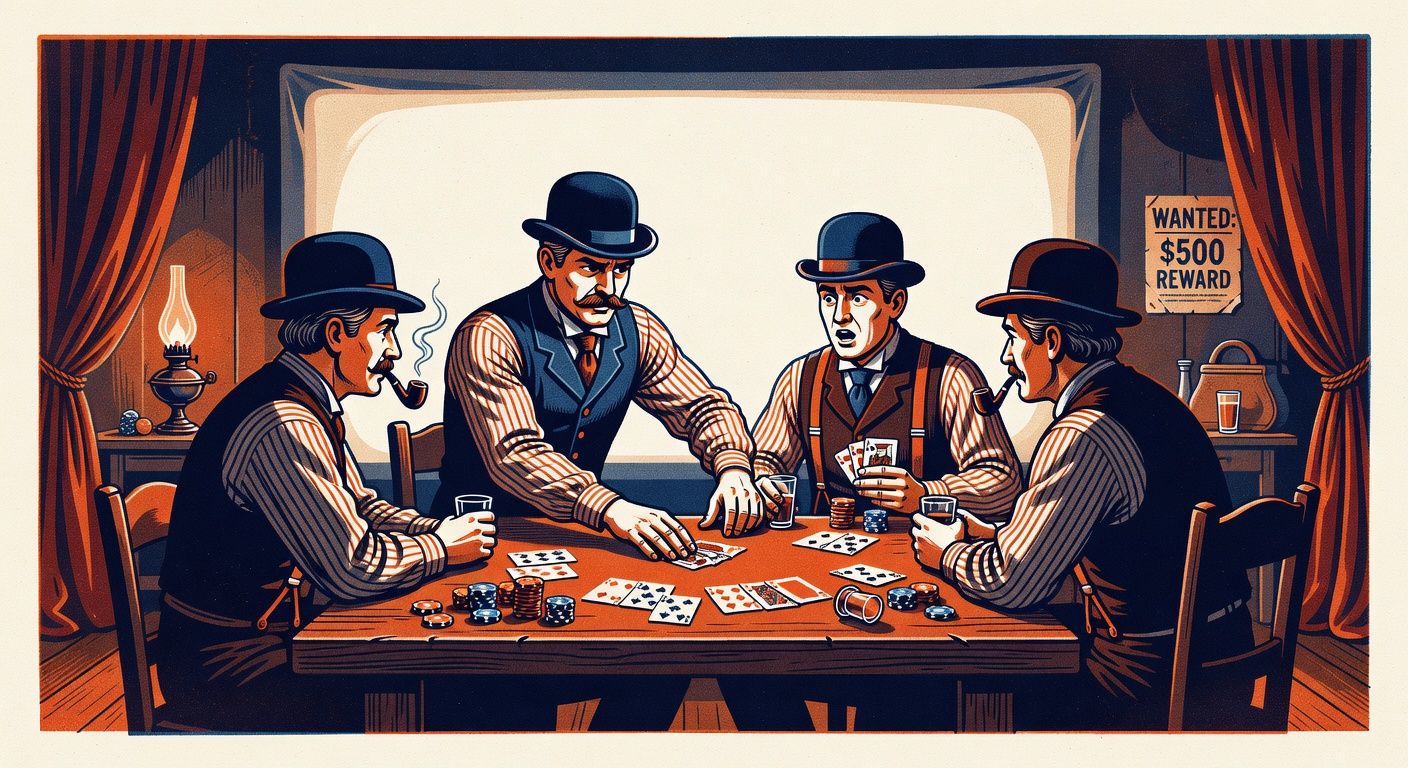
Rounders is a film about poker that is actually a film about subjective value. Matt Damon's character Mike McDermott is not pursuing money in the way a classical economist would describe it. He is purchasing something else entirely: the experience of testing himself against other players in a game where the rules are fixed and the outcome is not predetermined.
This is the Austrian school insight. Money is not the goal. Money is the medium through which players express their time preference and their discount rate. A player sitting in a game for twelve hours is implicitly saying that the value of being in that game right now exceeds the value of that money in his pocket.
The Economics of the Game
In the film, McDermott keeps coming back to poker. His law school is waiting. His girlfriend is waiting. Poker offers him something: the marginal utility of playing one more hand. This marginal utility is obviously positive to him, even as it becomes negative to everyone around him.
The film does not judge this. It presents it as a fact about how humans value things. Some people value the present moment of poker more than they value future security. The Austrian school would say these people have a high discount rate. They prefer present consumption to future consumption.
Rounders was released in 1998. The online poker explosion was still years away. The film anticipated what online poker would make explicit: poker is not primarily about money. It is about matching yourself against other players according to fixed rules in a frame that shields you from the practical consequences of your decisions for a few hours at a time.
Why the Film Endures
The cult status of Rounders is instructive. Poker players watch this film repeatedly. They do not watch it the way people watch other gambling films. They watch it as a description of their own revealed preferences.
Mike McDermott's decision to play poker instead of attend law school is presented as noble or tragic depending on your moral framework. Economically it is neither. It is simply a statement of preference ordering. He prefers poker now to law school later. This preference is measurable in his behavior.
The film's insight is that people are willing to bear significant costs for the opportunity to play poker. They will forgo income, relationships, time, and security. This is not irrationality. It is simply evidence that poker provides something they value more.
Austrian economics calls this revealed preference. McDermott reveals his preferences through his actions. No subjective judgment about whether poker is "worth it" can override what his behavior tells us about his actual preference ordering.
The Game as Trade
In poker, a player is trading money for the opportunity to play. The amount of money they are willing to trade is a measure of how much they value the game. Some traders place a high valuation on this exchange. Some place a lower one.
Rounders captures this dynamic perfectly. The film understands that poker is neither good nor bad. It is a set of trades, and the interesting economic question is what each trader is actually purchasing. McDermott is purchasing the margin between his skill and his opponents' skill. He is also purchasing something harder to name: the sensation of being alive in a game where the stakes are real and the outcome is uncertain.
The film endures because it does not moralize about this purchase. It simply describes it.