You've got money sitting in an online casino account. A real amount. Enough to matter. Now you want it in your bank, where it can sit and accrue interest, or disappear into the mortgage, or wherever money goes when you stop thinking about it. You've got two options, and the casino is betting you pick the one that keeps your money in their system longest.
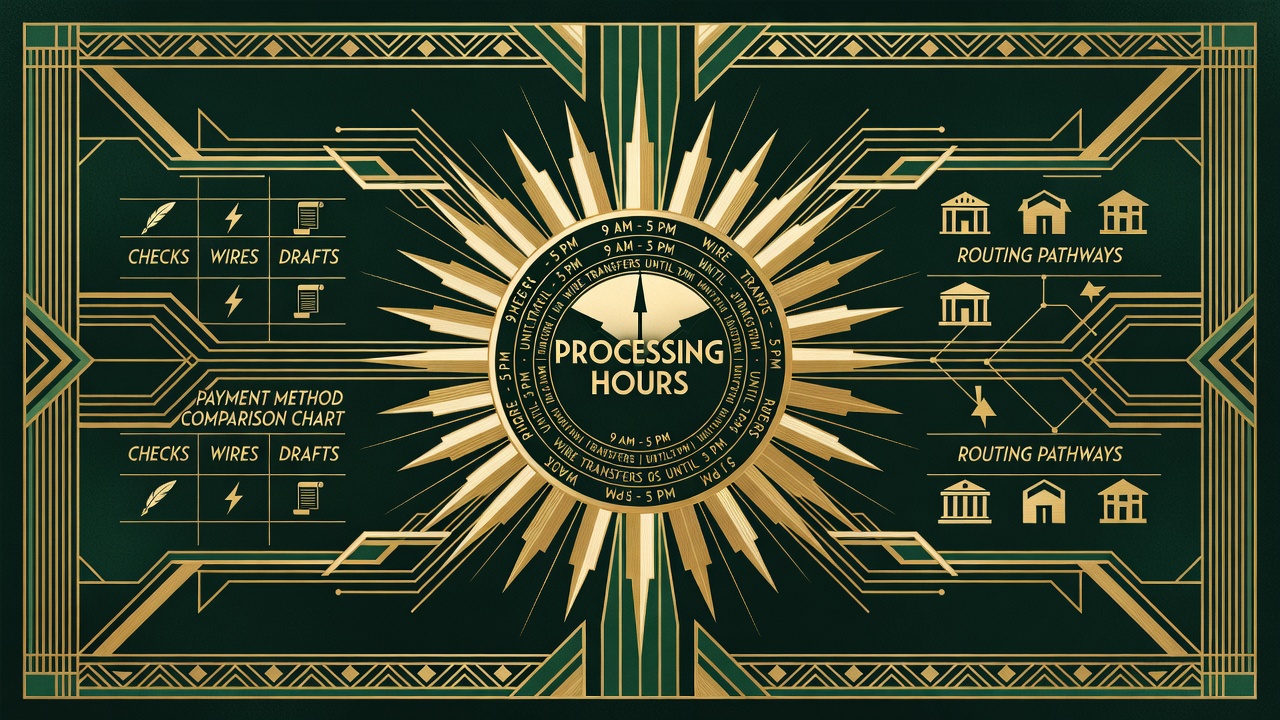
Wire transfers move fast. A wire transfer is what bankers call a "pull" on your account: the casino's bank contacts your bank directly, claims the money with your authorization, and moves it from one vault to another. The transaction settles in hours, sometimes overnight. Your account shows the deposit by morning. This is the method casinos hate, because the money leaves their control instantly.
ACH is slower. Automated Clearing House transfers work through a batch system where transactions sit in a queue, processed in scheduled blocks throughout the day. An ACH transfer you initiate at 9 AM might not settle for two to three business days. The money floats in a kind of limbo, traveling through intermediary systems, passing through clearinghouses. It's more like sending a letter than making a phone call.
The Fee Differential
Casinos charge you for the speed. A wire transfer typically costs fifteen to fifty dollars depending on the casino and your jurisdiction. An ACH transfer is usually free. This price difference is deliberately designed to steer you toward the slower option if you're not paying attention. The casino saves money on the transaction; you save money on the fee. Both parties win, except you lose two to three days of liquidity.
Wire transfers are also capped in some jurisdictions. If you've won a large amount, the casino might limit single wire transfers to five thousand dollars and require you to do multiple transactions. Each transaction carries its own fee. Each wire takes time to process. By the time you've wired out a major win in chunks, you could have withdrawn via ACH in a single batch, even if it took longer.
The Real Cost
There's something else happening. While your ACH transfer sits in the clearing system, it's not yet your money and it's not yet in your control. You can't spend it. You can't move it. Psychologically, it's still not real. Casinos understand this dynamic intimately. They've studied it. A player whose money is "in transit" sometimes experiences something resembling FOMO: fear that the opportunity to get it back into the casino will pass. By the time the transfer finally settles three days later, some percentage of players will have logged back in, found a game they liked, and lost the margin they were planning to keep.
Wires cut this psychology short. You have the money, in your account, in eight hours. The thinking changes. The door closes. The casino gets no second chance at your winnings.
If you're withdrawing a small amount, the fee for a wire barely registers. Five thousand dollars winnings, fifty-dollar fee: you're keeping $4,950. If you wait three days for free ACH, you keep the full amount, but you're gambling against your own impulse control. Some people have that discipline. Most don't.
The smart move depends on your self-awareness. If you're the type who logs in to check on pending transfers and finds yourself browsing the slots while you wait, wire the money and pay the fifty dollars. It's an insurance premium against yourself. If you've got the iron discipline to not log in for three days, take the ACH and keep the fee. Either way, the casino is counting on you not thinking about which option you're really paying for when you choose the free one.