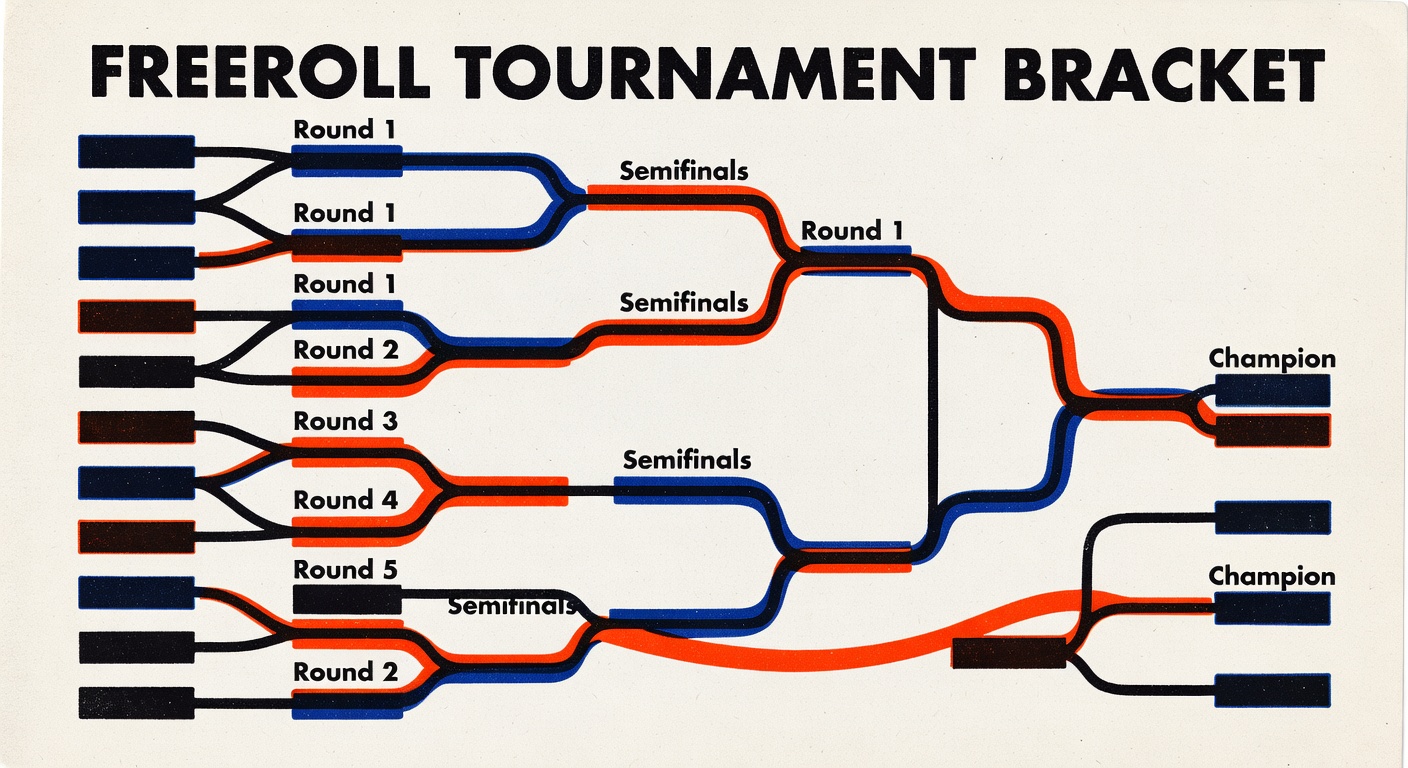
1970s: The First Freerolls. Vegas casinos started running free poker tournaments to get people in the door. The idea was simple: free tournament, you might spend money elsewhere. The play was loose. Nobody cared because they had not paid to enter. This is still true. Freeroll games are notoriously bad strategy games because the stakes feel fake.
1990s: The Online Boom. PokerStars and Full Tilt started running freerolls online. Thousands of players. Single event. Winner got $50. The value of a win was still real, even if the barrier to entry was zero. The games were incredibly soft because most players were amateurs.
2000s: The Legality Crackdown. After the UIGEA in 2006, freerolls became a compliance issue. Some sites killed them. Others saw them as a way to retain players. The freeroll became a loyalty tool. Play in paid tournaments, earn tokens, enter freeroll with your tokens.
2010-2020: The Era of Soft Games. By this point, freerolls were relegated to skins and smaller sites. The big sites had moved to paid tournaments only. Freerolls on the remaining sites were incredibly soft because casual players were the only ones entering.
2020-Present: Revival Through Apps. Mobile poker has brought back freerolls. Apps like PokerStars and Pokerbaazi run daily freerolls. The prize pools are modest ($50-$200 for the winner), but the volume is huge. Millions of players.
How to win one
Early phase (first thirty minutes): Play tight. Fold almost everything. The game is chaos. People are taking terrible risks because they have nothing to lose. Let them eliminate each other.
Middle phase (when 60% of the field is gone): Start opening your range slightly. You still have chips. You are patient. You are strong. Other players are desperate. They will take your money if you let them. Do not let them.
Final table: Play position. If you are on the button, open more hands. If you are in early position, tighten again. The math of the end-game is simple. You have five players left. Blinds are going up. Somebody is going broke every two minutes. Play tight until you have a hand.
Common mistakes in freerolls
Do not think of the tournament as free. The opportunity cost is your time. If you would not spend three hours playing for $20, do not play a freeroll for $20. That changes your mindset.
Do not play too many hands early. The game will select players. Whoever survives the chaos will be tighter, sharper players. You want to be that player.
Do not go broke on emotion. A freeroll induces a weird emotional state. It feels low-stakes (because it is free), so you play loose. Then when you lose, it feels bad because you lost the chance to win. Treat the freeroll like a paid tournament. Play tight. Make good decisions.
The difference between a freeroll winner and a freeroll loser is about forty hands. The winner makes forty more correct decisions than the loser. That is the whole skill.
So: play tight early, patient in the middle, positional in the end-game. Execute that plan. Win the freeroll.