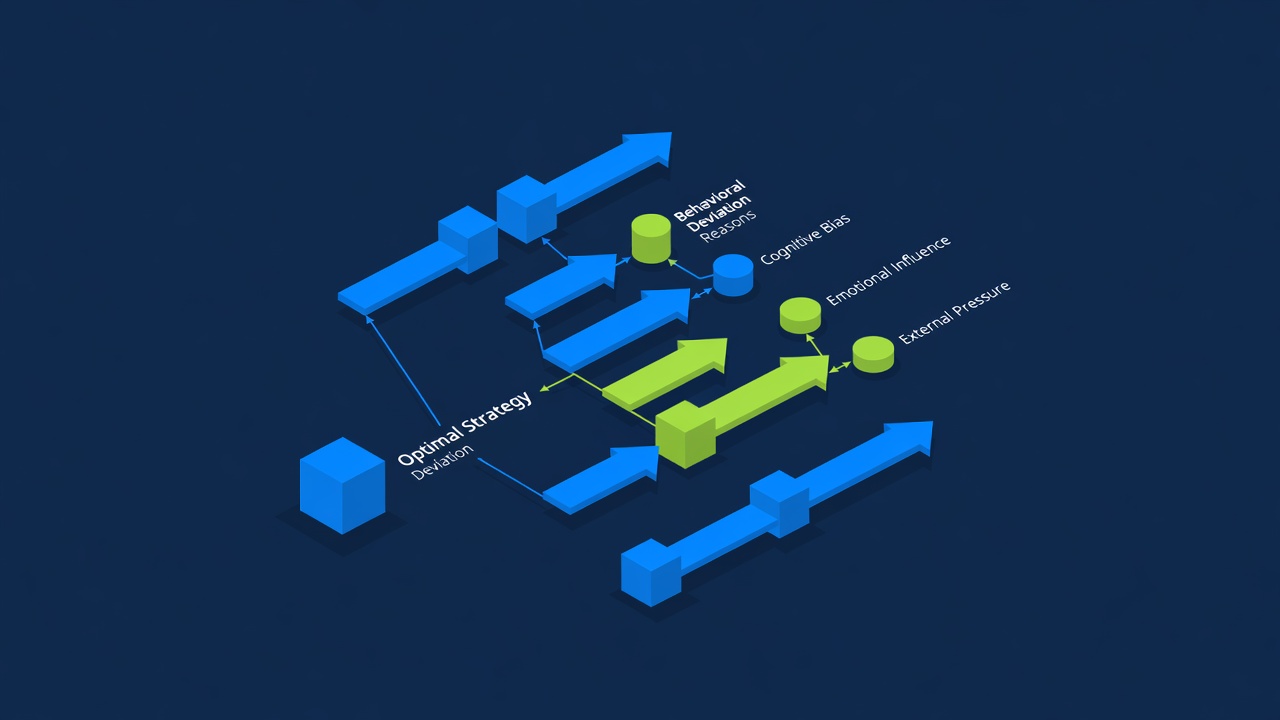
A poker player studies optimal strategy for months. They learn range analysis, pot odds, position. They understand that playing hands out of position requires stronger holdings. They arrive at a game and play hands out of position anyway. Why?
This is not stupidity. This is the gap between knowledge and execution, and it reveals something about human decision-making under stress and uncertainty. The optimal strategy exists in a calm, computational space. Gambling happens in an emotional, time-pressured, physiological state.
Near-Miss Effects
You play a hand suboptimally. You get lucky. You win. The near-miss effect (the psychology of almost-getting and barely-getting) reinforces the deviation. Your brain records: I played that hand wrong, but I won. Therefore, maybe my deviation was clever. Your next similar situation, you deviate again, hoping to replicate the luck.
This pattern repeats. Eventually, you hit a situation where the deviation costs you money. But you've already had several wins from deviations, so the loss feels like bad luck rather than bad decision-making.
Loss Aversion
Optimal strategy sometimes requires folding when frustrated. You've played tightly for an hour. You're bored. A playable hand arrives. Folding means admitting that the hand wasn't good enough. Optimal strategy says fold. Loss aversion (the psychological pain of losses exceeds the pleasure of wins) pushes you toward playing.
Playing is active. Folding is passive. When you're frustrated, passive feels like failure. The optimal strategy becomes emotionally unacceptable.
Illusion of Control
ManyGambling decisions create an illusion of control. You think your "read" on an opponent is better than it is. You think you're "playing well today." These feelings are often false, but they make suboptimal plays feel correct. Playing a weaker hand "because I know my opponent" is deviating from strategy. It feels good because it feels like skill.
Time Pressure
Optimal decision-making requires computation. At poker, this means quickly assessing ranges, odds, opponent tendencies, and relative position. Under actual time pressure (tournament play, live casino), this computation is difficult. Deviations are often the path of least cognitive resistance. You play the hand that feels natural rather than the hand that is optimal.
The Addiction Component
For problem gamblers, strategy deviation is structural. The optimal strategy might be "don't gamble." But the reward circuitry (variable reinforcement, dopamine hits, near-misses) is so powerful that the optimal strategy is emotionally impossible. You deviate not because you calculate poorly; you deviate because your neurobiology is pushing you toward higher risk.
The Defense
Understanding deviation is the beginning of prevention. First, recognize when you're deviating and what triggered it. Was it near-miss reward? Emotional frustration? Illusion of control? Different triggers require different defenses.
Second, create environmental constraints that make deviation harder. A poker grinder might set strict table selection rules (never play out of position against unknown opponents). Respect the rules mechanically, not emotionally.
Third, accept that perfect strategy execution is impossible. The goal is to deviate rarely and to deviate toward plays that are close to optimal, not radically different. If your strategy says "fold with this hand," deviating might be calling rather than playing aggressively. Calling is only slightly suboptimal. Aggressive play might be radically suboptimal.
The honest assessment: you will deviate. The best you can do is know why you deviated and adjust so the deviation is smaller next time.