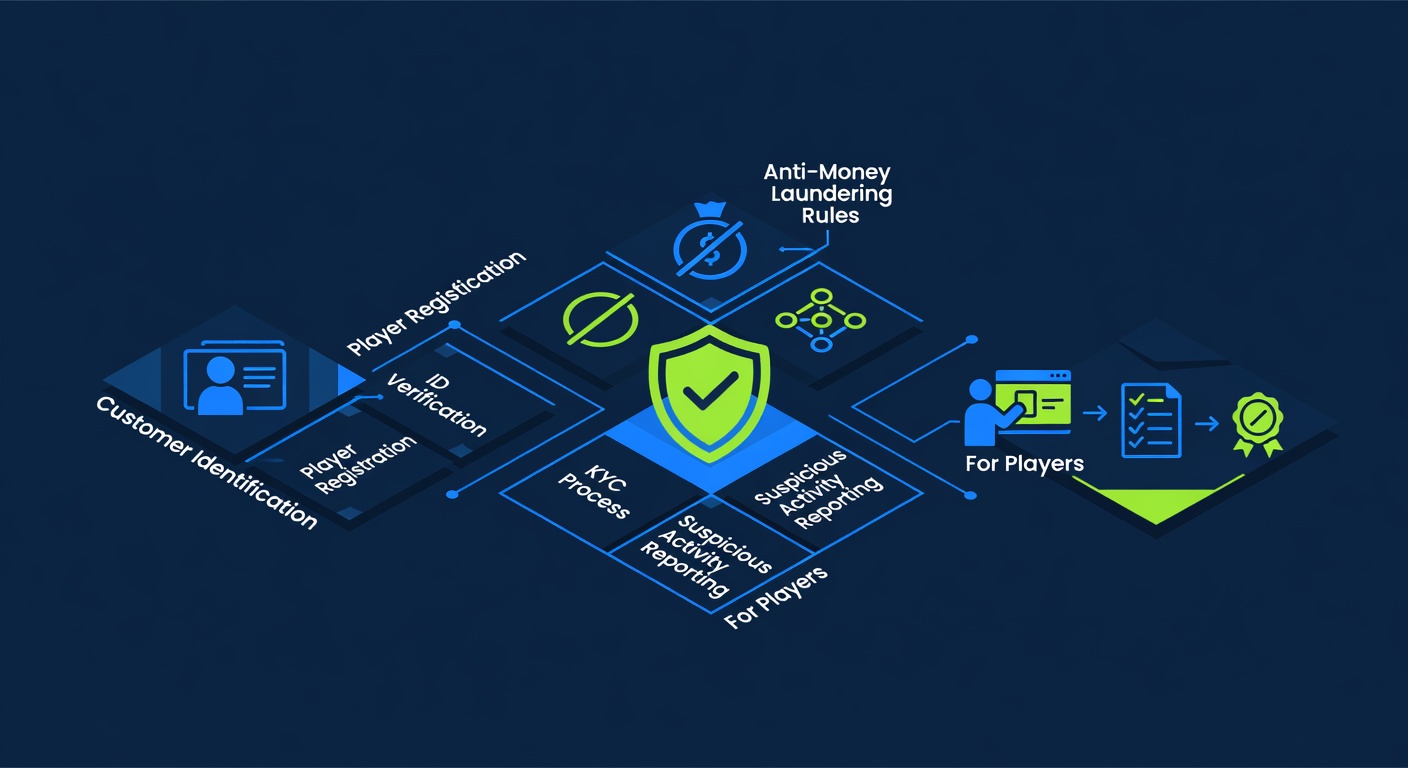
Know Your Customer (KYC) and Anti-Money Laundering (AML) procedures are not obstacles to your gaming. They are regulatory requirements that all licensed casinos must implement. Understanding them helps explain why certain things happen during your account setup and withdrawal process.
KYC refers to the casino's obligation to verify your identity. This happens when you register. The casino collects your name, address, date of birth, and sometimes identification documents. They verify these details against databases. This is not optional for licensed operators. It is mandated by every major gaming jurisdiction: Malta, the UK, Curacao, Kahnawake.
The Purpose of KYC
The purpose is straightforward. The casino needs to know who you are. This prevents underage gambling. It prevents the same person from opening multiple accounts. It prevents use of stolen identities. From a regulatory perspective, a casino cannot legally operate without knowing who is playing on its platform.
When you provide documents, the casino (or a third-party KYC service) compares them against public records and databases. A valid passport or driver's license gets verified. Your address gets checked. This usually takes 24 to 48 hours, sometimes longer if documents are unclear.
For players, this means delays. You register on Monday. You want to play on Monday evening. The casino says they need to verify your documents first. This is frustrating. It is also the law.
Anti-Money Laundering (AML) Requirements
AML requirements are more complex. The casino must monitor your activity for patterns consistent with money laundering. This includes: deposits followed immediately by large withdrawals; multiple deposits from different payment methods followed by a single large withdrawal; consistent patterns of losing large sums then immediately re-depositing equivalent amounts.
If your activity triggers an alert, the casino may freeze your account while they investigate. They may request additional documentation. They may ask questions about the source of your deposits. This is not because you did something wrong necessarily. It is because your pattern of activity requires investigation.
The thresholds for reporting vary by jurisdiction. The UK requires casinos to report any transaction over 10,000 pounds. Curacao requires reporting above certain thresholds, though specific amounts are less clearly defined. Malta requires reporting for structuring: deliberate attempts to break up large transactions into smaller ones to avoid reporting requirements.
What Triggers Investigation
A single large deposit does not trigger investigation. Deposits are how people fund their accounts. What triggers investigation is a pattern. Examples include:
Deposit 5,000 dollars, play for two hours, withdraw 4,500 dollars, then repeat the same pattern immediately. This looks like you are using the casino to convert funds, not to gamble.
Deposit from ten different payment methods within one day, then request a single large withdrawal. This looks like you are consolidating funds through the casino's platform.
Deposit 500 dollars, lose it immediately, then deposit 500 dollars immediately again, on a daily basis. This may indicate you are trying to meet some external requirement or processing constraint.
What You Can Do
From a player perspective, understand that KYC and AML exist. Provide accurate information. You are not deceiving anyone by giving them your real identity and address. Provide documentation promptly when requested. If your account is frozen for AML review, do not panic. Provide additional documentation if requested.
If you win substantially, expect the casino to request additional verification before paying. This is normal. A withdrawal of 50,000 dollars will trigger more scrutiny than a withdrawal of 500 dollars.
Understand that casinos are required to report large transactions to government authorities. This is not the casino choosing to report you. This is the casino complying with regulatory obligation. You have the same reporting requirements that the casino does.
The system exists because governments and regulators want to prevent money laundering and terrorist financing through gambling platforms. Your KYC and AML experience is the cost of playing at a regulated, licensed casino.